Bulk custom washed T-shirt manufacturing brief
A U.S. buyer sourced custom-logo vintage acid-washed oversized T-shirts in 100% cotton. The order records show two completed transactions with two product lines in each order. The first program was in the approximately 100-piece range. The buyer then placed a repeat program described in the conversation as about 550 additional T-shirts.
The evidence supports a real bulk washed T-shirt reorder story, but it is not presented as a perfect testimonial. A post-order print-durability complaint became an important part of the working relationship and exposed several controls that apparel buyers should define before scaling.
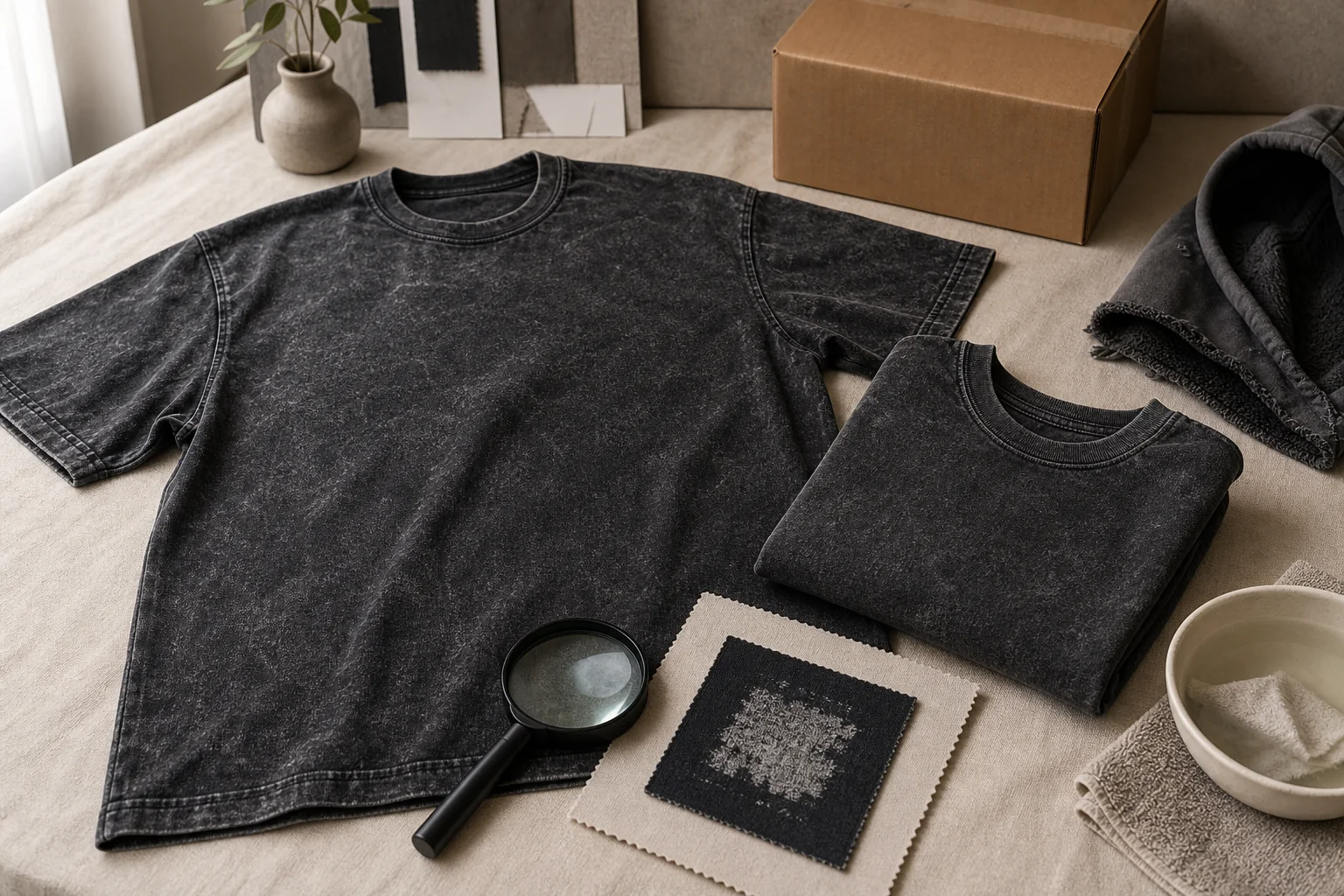
For comparable product planning, review our custom T-shirt manufacturing route and the representative vintage washed cotton T-shirt direction. The displayed product is not claimed to be the buyer's exact blank.
How the washed T-shirt order moved from first run to bulk reorder
- First completed orderThe first documented order was placed in February 2026. It included two product lines and a visible washed cotton T-shirt line in the approximately 100-piece range.
- Larger repeat programA second order followed in March. The buyer later referred to this program as approximately 550 additional shirts. The platform order record is marked completed.
- Print-care concern during fulfillmentIn April, after the larger repeat order had already been placed, the buyer reported severe print deterioration on a shirt from the earlier program after several wash-and-dry cycles.
- Production review and care clarificationThe concern was escalated to the production team. The conversation separated machine washing from tumble-dryer exposure, requested visual evidence and documented care guidance.
- Shipping and delivery follow-upThe buyer continued asking for port-stage updates, delivery timing, the final invoice breakdown and carrier tracking. The order records later showed both transactions as completed.
- New product development inquiryAfter the delivery follow-up, the buyer returned with a new concept for a slightly washed, distressed fleece-interior hoodie. The record verifies a new brief, not a completed hoodie order.
What the print-durability complaint actually showed
The buyer reported that a print had deteriorated much faster than expected after approximately four washing and tumble-drying cycles. The complaint was direct and serious. The seller asked for an image, checked again with the production team and explained that tumble drying can accelerate damage to garment prints even when machine washing itself is acceptable under the agreed care method.
The available record does not show a documented refund, replacement or laboratory result, so this case does not claim one. It shows the operational response that can be verified: the concern was acknowledged, escalated, discussed with production and followed by written care guidance. The buyer then continued shipment coordination and later submitted a new hoodie development brief.
Controls to define before bulk screen print, DTF or DTG production
This experience makes a practical point for every custom graphic T-shirt program: visual approval is not the same as a wash-durability standard. Print method, ink system, curing, washed fabric surface, artwork coverage and aftercare can interact. A bulk order should state how the decorated sample will be evaluated and what care instructions will be supplied to the end customer.
- Identify the approved blank, wash effect, fiber content and finished measurements
- Confirm the print method and artwork version for every colorway
- Agree a decorated-sample wash test before bulk production
- Record water temperature, detergent, cycle and drying method used in testing
- Approve the care label and buyer-facing care instructions
- Retain a production reference for comparison if a complaint is raised
- Define what evidence is needed for defect review and escalation
- Do not assume one care result applies equally to screen print, DTF and DTG
Completed orders, shipping follow-up and invoice control
The conversation documents the buyer asking when the bulk order would reach the destination, requesting a tracking number and later asking for an invoice showing the ordered items and size breakdown. Seller updates moved from an expected port arrival to carrier tracking and an estimated delivery date.
Publicly, the useful lesson is not the private route or freight amount. It is that post-production service still requires a clear packing and size record, milestone updates and a final commercial document that the buyer can reconcile against the order. Exact addresses, tracking references, prices and line-level commercial terms remain confidential.
Outcome: a real reorder case with a real quality lesson
Two completed order records support the commercial outcome. The customer moved from an initial washed T-shirt program to a substantially larger repeat program, coordinated the bulk shipment and later discussed another apparel category. The print-care complaint also exposed a gap that should be controlled earlier through decorated-sample testing and explicit drying instructions.
What this bulk washed T-shirt case proves - and what it does not
- A U.S. buyer placed two documented custom washed T-shirt orders
- Both platform order cards were marked completed
- The program grew from about 100 pieces to an approximately 550-piece repeat order
- The listed T-shirt direction was vintage acid-washed and 100% cotton
- A print-durability complaint was raised and escalated to production
- Shipping, tracking and invoice follow-up were documented
- A later washed distressed fleece hoodie brief was discussed but not shown as ordered
- The record does not prove a refund, replacement, test certification or universal print durability