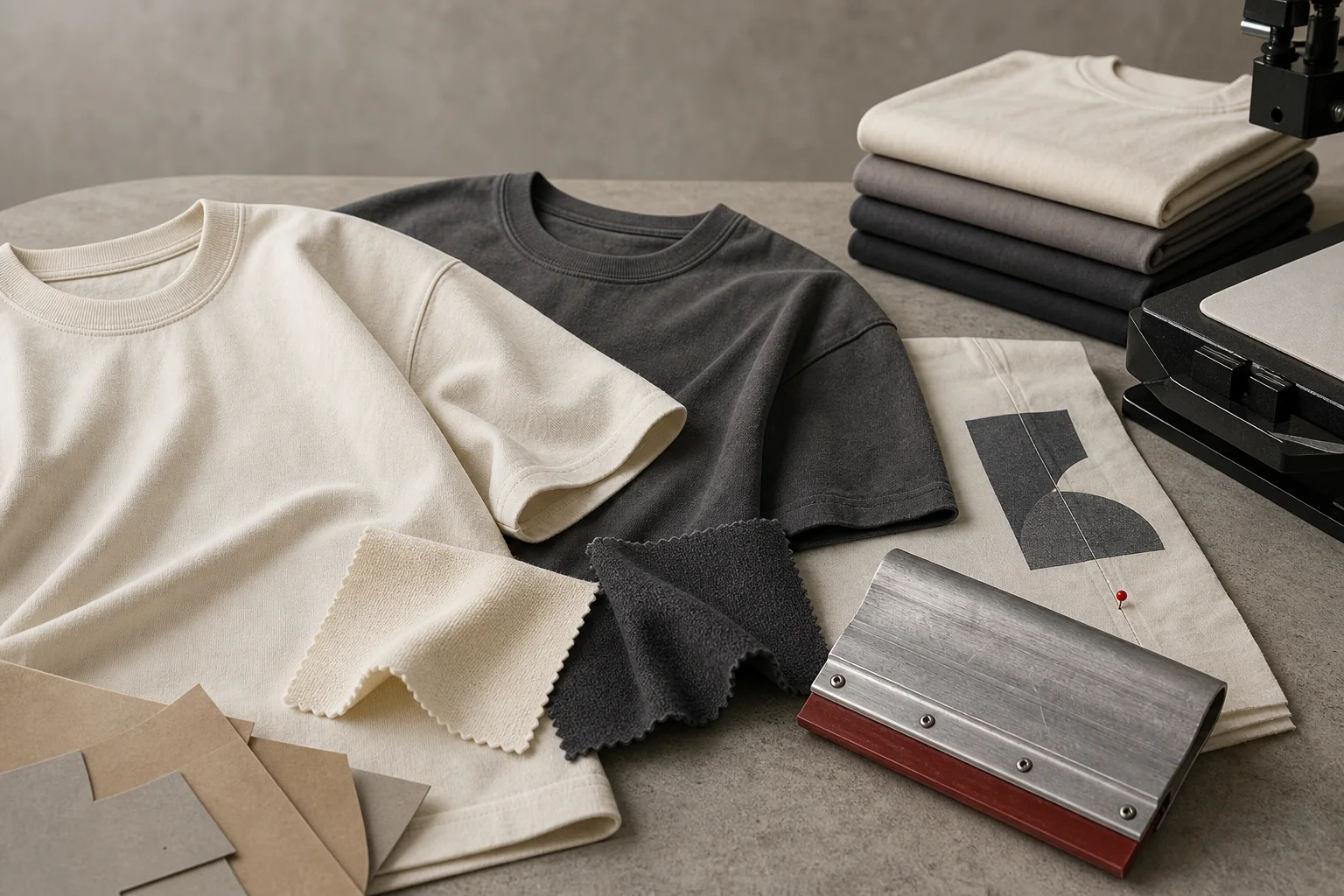
Custom heavyweight T-shirt manufacturing brief
An independent U.S. menswear brand needed a supplier relationship that could support more than one graphic T-shirt. The documented program began with multiple heavyweight cotton T-shirt lines, then expanded through repeat orders and revised artwork. One of the first recorded orders contained approximately 400 units; later completed programs reached the four-figure unit range.
The public case focuses on the production decisions that another buyer can evaluate. The customer's name, company, designs, addresses, order identifiers and exact commercial terms are deliberately excluded.
This is a real example of custom T-shirt sourcing and production management for a U.S. clothing brand. It is not a promise that every design, quantity or schedule will follow the same route.
How the T-shirt program moved from trial to repeat production
- Initial multi-line orderOne of the first recorded programs grouped several 300 GSM heavyweight cotton T-shirt lines into an approximately 400-piece order. The record shows staged payment and completed fulfillment.
- Early repeat ordersThe buyer returned for additional 300 GSM programs. Multiple follow-up records were completed, establishing that the relationship continued beyond a single sample or trial invoice.
- Four-figure productionLater heavyweight T-shirt programs entered the four-figure unit range. Acid-wash directions also appeared in related order records. Exact quantities and prices are withheld, while completed order states were verified separately.
- Ongoing product refinementThe active July reorder moved back to a lower-hundreds, multi-design batch so the buyer could compare fit, fabric weight and decoration choices across individual designs.
230 vs 300 GSM T-shirts and fit alignment
The earlier repeat programs used a 300 GSM heavyweight cotton T-shirt direction. During the latest design review, the buyer asked for a looser T-shirt similar to a previous acid-wash fit but without the wash. Options around 230–275 GSM were discussed, and 230 GSM was selected for one of the active designs while other designs remained on heavier blanks.
This decision was not only about a number. The conversation distinguished a looser acid-wash-style silhouette from a more structured, boxy heavyweight T-shirt. For repeat production, a brand should carry forward approved garment measurements, not rely on terms such as “oversized” or “loose” alone.
- Confirm finished GSM and cotton composition
- Separate loose, oversized and boxy measurement targets
- Record the approved blank or sample reference by design
- Check print size against the usable flat area
- Keep each color and size breakdown in writing
- Reconfirm the specification when changing wash or fabric weight
Why one seam-crossing DTG design was not accepted
One proposed back graphic extended across the body and both sleeves. The production review identified a high defect risk for DTG because sleeve and armhole seams create an uneven printing surface. Ink and pressure cannot be controlled as consistently across raised stitching as they can on a flat panel.
Two alternatives were explained: use DTF for a more practical application on the finished garment, or print the individual fabric panels before sewing. Panel-level printing adds positioning and assembly steps and normally needs a more suitable production quantity. The buyer decided to remove the risky design instead of forcing it into the order.
Multi-design reorder, print confirmation and shipping choice
The latest paid reorder combined three T-shirt designs in a lower-hundreds batch. The record shows 230 and 300 GSM T-shirt lines, DTG and screen-print planning, artwork-size checks and production start confirmation. The buyer reviewed the first DTG result positively while the remaining screen-print files were still being prepared.
Air and sea routes were compared using separate freight and transit estimates. The buyer selected air for this batch. Exact rates, addresses and order values are not published. At the time of this case publication, the latest batch was in production and had not yet been presented as delivered.
Repeat-order outcome and evidence boundaries
The verified record contains multiple completed production programs and delivery confirmations before the active July reorder. Together, those records support a repeat-order customer story: the brand tested a supplier relationship, placed additional orders, scaled quantity and continued to ask for new product and decoration advice.
What this repeat T-shirt case proves - and what it does not
- A U.S. buyer placed multiple documented custom T-shirt orders
- One early order was approximately 400 pieces
- Later completed programs reached four-figure unit quantities
- 230 and 300 GSM T-shirt directions were documented
- Print feasibility was reviewed before accepting artwork
- Multiple earlier records were completed or delivered
- The latest paid reorder was still in production at publication
- The case does not establish a universal MOQ, price, lead time or defect rate