Stone wash vs acid wash: the quick answer
Stone wash generally aims for a worn, softened appearance through controlled abrasion. Acid or high-contrast wash aims for a more irregular, contrasted vintage surface. Enzyme wash is often used for softening and reducing surface fuzz. These names are used inconsistently, so a buyer should approve the visual standard and production sequence rather than relying on the name.
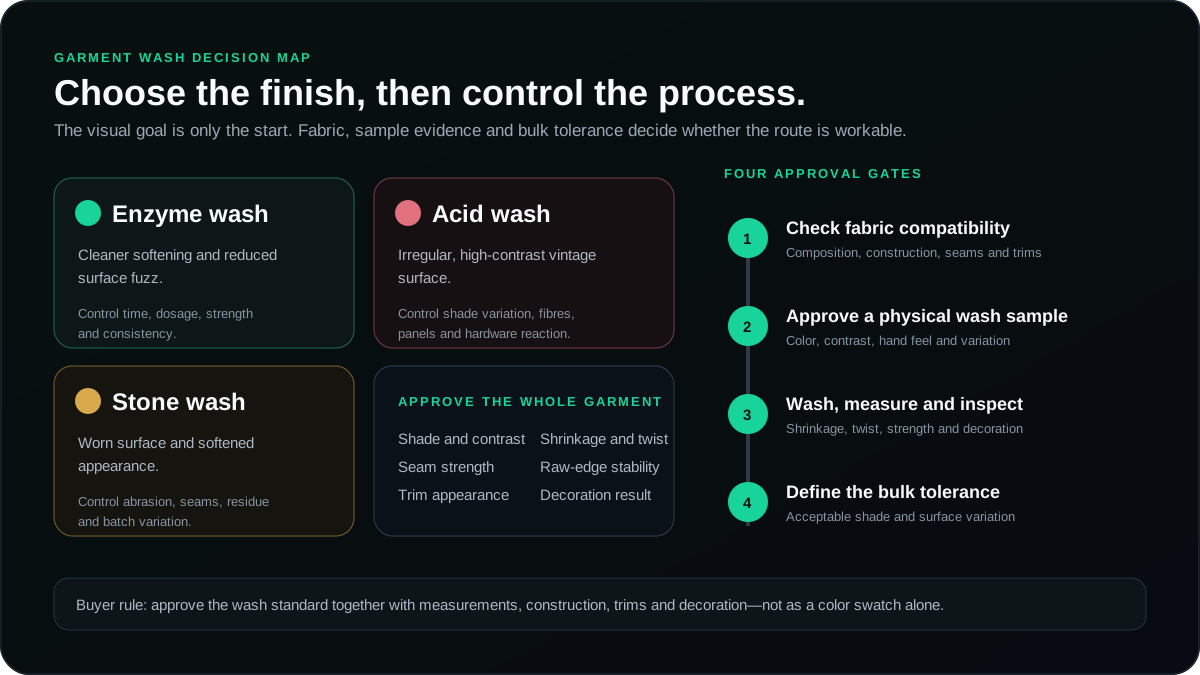
Acid wash, stone wash and enzyme wash compared
| Wash direction | Typical visual goal | Key risks to manage |
|---|---|---|
| Acid or high-contrast wash | Irregular, high-contrast vintage surface | Shade variation, fibre damage, uneven panels, hardware reaction |
| Stone wash | Worn surface and softened appearance | Abrasion, seam damage, residue and batch variation |
| Enzyme wash | Cleaner softening and reduced surface fuzz | Strength loss or uneven effect if time and dosage are not controlled |
Start with fabric compatibility
Fibre composition, yarn, knit density, color system and garment weight affect the result. A recipe developed on cotton may not transfer directly to a cotton-polyester blend. Rib, sewing thread, labels, prints and metal hardware may react differently from the body fabric.
Approve more than the wash color
- Overall shade
- Contrast and abrasion
- Panel-to-panel consistency
- Seam strength
- Hole or raw-edge stability
- Shrinkage and twist
- Label and trim appearance
- Decoration after laundering
Define bulk tolerance before production
Washed garments will not be visually identical. Approve a standard sample and, when appropriate, light and dark boundary samples. State which areas may vary and which defects are unacceptable.
Information to include in a garment wash brief
Provide fabric composition and GSM, base color, target wash image, approved reference garment, acceptable variation, shrinkage target, distress map, decoration sequence, testing requirements and order quantity by color.
Review washed apparel product directions, then send the selected references through the project inquiry form.
Washed product directions to compare before sampling
These verified product pages are practical reference points for construction, weight and wash direction. They are starting references rather than promises that every treatment, fabric and color will produce an identical result.
- Hoodie: 360GSM spray-washed distressed hoodie
- T-shirt: 275GSM rib-panel washed T-shirt
- Shorts: cotton-blend washed shorts, 380GSM wax-dyed terry shorts, distressed cotton-blend shorts and 400GSM pique wax-dyed shorts
- Joggers: snow-washed panelled joggers, cotton-terry snow-washed joggers, 430GSM wax-dyed joggers, fleece-lined wax-dyed joggers and 450GSM spray-washed joggers
For an order-level example, review the 350GSM custom washed hoodie case study, including sample revisions and bulk-production controls.