Blanks vs cut-and-sew: the quick answer
A streetwear blank is a finished T-shirt, hoodie or other garment selected before artwork, labels or packaging are added. Custom cut-and-sew starts with fabric, a pattern and product specifications so the garment itself can be developed around the brand.
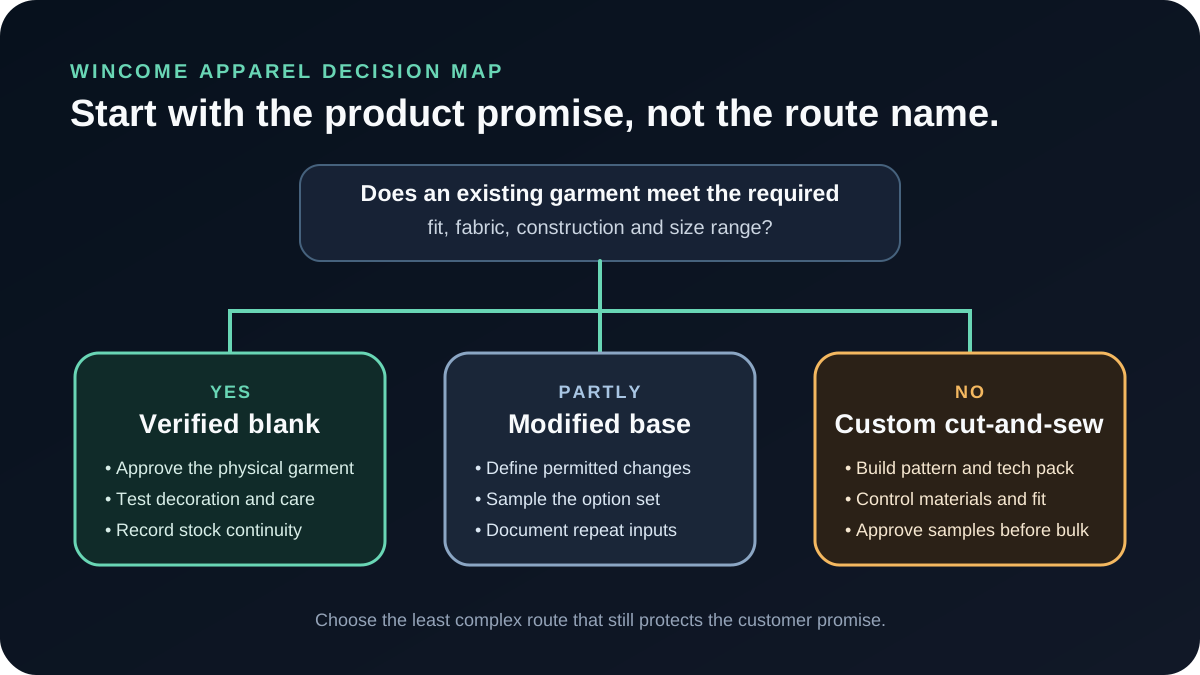
Use a verified blank when its existing fit, fabric and construction already meet the product promise and the main goal is to test artwork, audience or demand. Use custom cut-and-sew when the silhouette, material, wash, panel construction, trims or size system must be product-specific.
Streetwear blanks and cut-and-sew compared
| Decision factor | Finished blank | Custom cut-and-sew |
|---|---|---|
| Starting point | Existing finished garment | Brief, tech pack, fabric and pattern |
| Fit control | Limited to available silhouettes and sizes | Measurements, balance, grade and construction can be developed |
| Fabric control | Limited to available composition, structure, GSM and colors | Material can be sourced or developed to the agreed specification |
| Decoration | Added to an already constructed garment | Can be planned with panels and construction before assembly |
| Development work | Blank selection, decoration test and label or packing approval | Pattern, grading, sourcing, samples and production approvals |
| Minimum-order drivers | Stock, color, decoration, relabeling and packing | Fabric, color, pattern, cutting, size, trim and process setup |
| Main continuity risk | Blank style, color or stock may change or sell out | Approved fabric, pattern, trim and production records must be retained |
There is also an intermediate route: an available or supplier-controlled base garment with agreed changes. The broader white label, private label and cut-and-sew comparison explains how that route differs commercially.
Use streetwear blanks when the garment already works
Blanks are a rational production choice when the brand promise is driven mainly by artwork, curation, community or launch execution and a tested finished garment already supplies the necessary product foundation.
- The physical fit works on the intended customer rather than only in a supplier photo.
- The fabric structure, weight, color and hand feel suit the retail position.
- The available size range matches the planned market.
- The garment accepts the required print, embroidery, patch or other decoration.
- Stock continuity and acceptable substitutes can be planned.
- The first run is intended to validate demand before deeper development.
Do not select a blank by GSM or unit price alone. Review collar or rib recovery, shrinkage, side seams, surface, measurements and decoration performance. Use the print and embroidery guide to compare decoration requirements before committing artwork.
Use custom cut-and-sew when the garment is the design
Custom development is justified when customers should notice product decisions that cannot be added to a finished blank.
- A proprietary boxy, cropped, oversized or proportioned fit is central to the concept.
- The fabric composition, structure, finished GSM or wash must be controlled.
- Panels, pockets, seams, hoods, ribs or other construction details are product-specific.
- Artwork must cross seams or be positioned before assembly.
- The size range or grade cannot be supported by available garments.
- The brand needs documented repeat-order control around an approved pattern and specification.
Custom does not mean unlimited. Material, color, trim and process minimums still shape feasibility. Build the route around a controlled apparel tech pack, physical samples and written approval records.
How to test a blank before the first drop
- Order candidate garments. Evaluate the physical product in relevant sizes and colors.
- Record measurements. Check length, width, sleeve, shoulder and other product-critical points using one method.
- Run a care test. Follow the intended care instruction and record dimensional, shade and surface changes.
- Decorate a sample. Test actual artwork, scale, placement, hand feel and reverse-side effect.
- Review label and packing scope. Confirm allowed changes and market information before bulk relabeling.
- Check continuity. Record stock position, reorder route and the approval required for any substitute.
The pre-production sample checklist provides a useful approval structure even when the garment starts as a finished blank.
What a cut-and-sew brief must add
A reference photo alone does not define a custom product. Send a controlled brief that separates fixed requirements, preferences and open questions.
- Front and back flat sketches
- Base-size measurements and grade direction
- Fabric composition, structure, weight and finish
- Construction and stitch details
- Artwork files, techniques, dimensions and placement
- Labels, trims and packaging
- Quantity by style, color and size
- Target market and required test or compliance scope
- Sample stages, tolerances and approval owner
- Delivery destination and timing assumptions
Use the custom clothing RFQ template to organize the first production discussion.
A focused capsule can use both routes
A brand does not need one route for every product. An artwork-led T-shirt may use a verified blank while a hero hoodie or jogger uses custom development because its fit and construction carry the collection. Keep the specifications, samples, cost assumptions and reorder controls separate for each route.
A staged route can also reduce unnecessary development: validate the customer and artwork, document what the existing garment cannot deliver, then invest in custom changes supported by real demand evidence. Do not move to custom production only to use the word “custom.”
When to move from blanks to cut-and-sew
Consider moving only when the limitation is specific and validated.
- Customers repeatedly identify a fit or size-range problem that available blanks cannot solve.
- The required fabric, weight, finish or wash is unavailable or inconsistent.
- A signature construction or panel detail is central to differentiation.
- Blank stock changes repeatedly disrupt launches or reorders.
- The brand can fund development, samples and the full quantity structure without depending on an unrealistic headline MOQ.
- The team can maintain the tech pack, approvals, inspection criteria and repeat-order records.
Use this final decision checklist
| Question | If yes | If no |
|---|---|---|
| Does a physical blank meet the required fit and fabric standard? | Test decoration and continuity | Define the missing requirement |
| Is the differentiation mainly artwork or community? | A blank may be sufficient | Assess product-specific development |
| Does the design require new pattern or construction work? | Evaluate custom cut-and-sew | A finished or modified base may work |
| Can the team support samples, quantity layers and approvals? | Request a comparable custom quote | Reduce complexity or stage the route |
| Can the route be repeated from controlled records? | Proceed to sample approval | Resolve continuity before bulk |
For an end-to-end first-launch plan, continue with the streetwear brand sourcing and production guide. When the product brief is commercially ready, review the custom streetwear manufacturing route.