Private label vs white label vs cut-and-sew: the quick answer
White label clothing usually starts with an existing or standardized garment available to more than one buyer. Private label clothing usually starts with a supplier base or product platform and adds agreed brand-specific options. Custom cut-and-sew clothing usually starts with a brand brief, pattern and tech pack so fit, fabric and construction can be developed for that product.
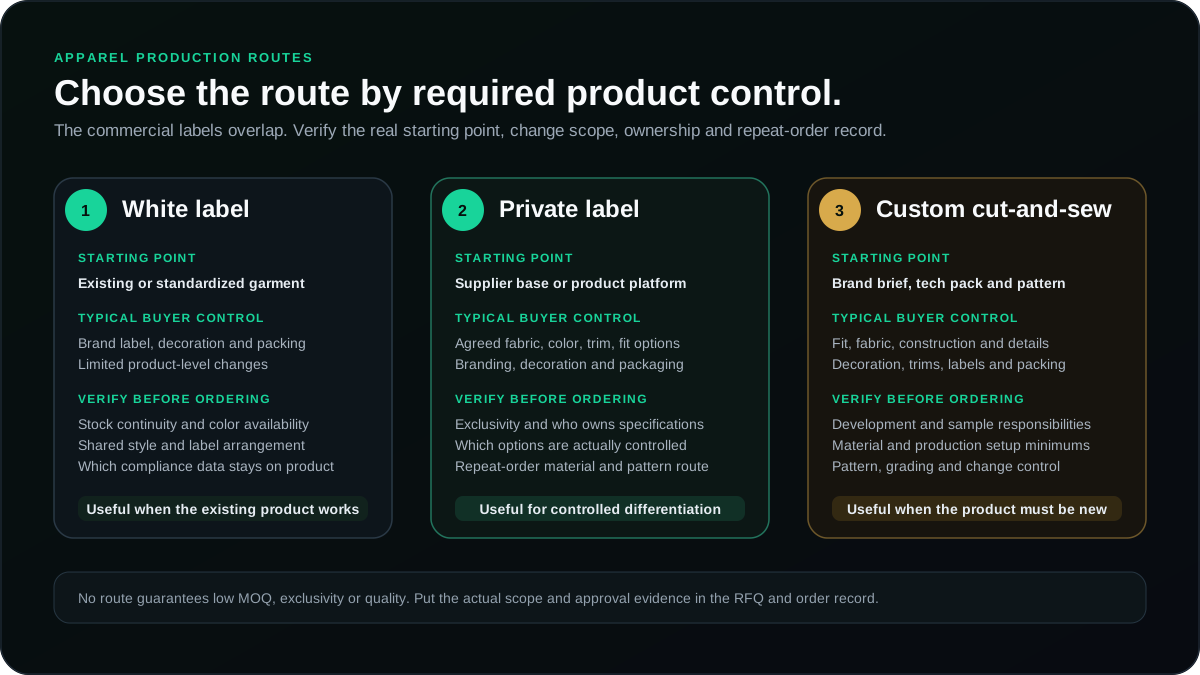
Apparel production route comparison
| Decision factor | White label | Private label | Custom cut-and-sew |
|---|---|---|---|
| Starting point | Existing or standardized garment | Supplier base style or product platform | Brand brief, tech pack and pattern |
| Typical control | Branding, decoration and packing | Agreed materials, colors, trims, fit options and branding | Fit, fabric, construction, decoration, trims and packing |
| Differentiation | Mainly brand presentation and artwork | Depends on the option scope and exclusivity | Can be built into silhouette and construction |
| Development work | Product review and decoration approval | Option selection, samples and controlled specification | Pattern, grading, sourcing and multiple sample decisions |
| MOQ drivers | Stock, decoration, relabeling and packing | Style, material, color, trim and option setup | Pattern, fabric, color, size, construction and process setup |
| Repeat-order risk | Base garment may change or sell out | Depends on control of the supplier platform and materials | Depends on retained pattern, specification and production records |
No route automatically means better quality, lower MOQ or faster delivery. Those results depend on the actual product, supplier capability and controlled evidence. After selecting the product route, compare domestic and overseas clothing manufacturing as a separate sourcing-location decision.
What is white label clothing?
White label clothing normally uses an existing garment that can be sold to several brands. The buyer may add a neck label, hangtag, print, embroidery or packaging without changing the core pattern and construction.
White label can work when
- The existing fit, fabric and construction already meet the product promise.
- The brand’s differentiation comes mainly from artwork, curation, community or distribution.
- Testing demand matters more than owning a unique silhouette.
- Available stock and repeat availability can be verified.
Do not assume relabeling makes the product exclusive. Confirm whether other buyers can purchase the same style, whether branding can be changed, and which care, fiber, origin or other required information must remain for the destination market.
What is private label clothing?
Private label clothing is sold under the buyer’s brand, but the development scope varies widely. A supplier may offer a controlled base style with options for fabric, color, fit adjustments, decoration, labels and packaging. Another supplier may use “private label” for fully custom production.
Private label can work when
- A suitable base style exists but needs controlled brand-specific changes.
- The buyer needs more differentiation than decorating a stock garment.
- The supplier can document the approved option set for reorders.
- Exclusivity, specification ownership and permitted reuse are stated rather than assumed.
What is custom cut-and-sew clothing?
Technically, most assembled garments are cut and sewn. In brand-sourcing discussions, custom cut-and-sew usually means the garment is developed to a brand-specific pattern and specification instead of decorating an existing finished blank.
Custom cut-and-sew can work when
- The required silhouette, measurements or construction does not already exist.
- Fabric structure, GSM, wash, trims or details are central to the product.
- The brand can manage a controlled apparel tech pack and measured approvals.
- Development cost, material minimums and sample revisions are included in the plan.
A custom route does not automatically transfer pattern ownership or guarantee exclusivity. Put ownership, permitted reuse, grading files, change control and retained production references in the commercial agreement.
How to choose the right clothing production route
- Write the non-negotiable product promise. Define the fit, fabric, construction, branding and market requirements that the customer should notice.
- Test an existing garment. If it already meets those requirements, a white label or decoration route may be sufficient.
- List the required product changes. If a controlled supplier base can support them, compare a private label route.
- Identify what must be newly developed. A new silhouette, pattern, construction or tightly controlled material route points toward custom cut-and-sew.
- Compare evidence, not names. Request samples, specifications, MOQ layers, approval stages and repeat-order controls for the exact route.
Use the custom clothing quote guide to compare included scope and exclusions rather than comparing unit price alone.
How the route changes MOQ, cost and timing
An in-stock white label garment may avoid pattern and fabric development, but decoration, relabeling and packing can still have minimums. Private label adds setup for the agreed options. Custom cut-and-sew adds pattern, grading, material sourcing, color, cutting and production setup.
| Ask about | Why it changes feasibility |
|---|---|
| Stock or made-to-order base | Determines whether product inventory already exists |
| MOQ by style, fabric and color | Shows where production is divided |
| Sizes and grade range | Changes markers, cutting and sample review |
| Decoration and label setup | Adds screens, digitizing, attachment and packing work |
| Development and sample scope | Separates product creation from bulk pricing |
| Repeat-order availability | Shows whether the same input can be sourced again |
The clothing manufacturer MOQ guide explains why one headline minimum cannot describe the whole order.
Verify exclusivity, ownership and repeatability
A logo label does not prove that a garment is exclusive. A custom sample does not automatically prove that the buyer owns the pattern. Before payment, record the commercial position of the product and its development files.
- Can the same base style be sold to other buyers?
- Which pattern, grading and artwork files exist?
- Who owns or may reuse each file?
- Which fabrics, colors and trims are buyer-specific?
- What happens if the original material becomes unavailable?
- Which approved sample and specification control bulk?
- Which records will be retained for a repeat order?
- Which label and market-compliance tasks belong to each party?
Follow the clothing sample process to connect route selection with prototype, fit, PP and TOP evidence.
Questions to put in a private label or cut-and-sew RFQ
- Is the quoted garment in stock, based on an existing style or developed from a new pattern?
- Exactly which fit, fabric, color, trim, decoration, label and packing choices are included?
- Can other buyers order the same garment or pattern?
- Who controls the tech pack, pattern and grading files?
- What MOQ applies by style, material, color, size and decoration?
- Which sample stages are included and what does each one approve?
- Which component substitutions are permitted?
- What evidence will support bulk inspection and repeat orders?
The downloadable custom clothing RFQ template provides a structured place to record product, quantity, branding, quality and delivery inputs.
A clothing brand can change routes over time
The first route does not need to be permanent. A brand may test demand using a suitable existing garment, move to a controlled private label base and later develop a custom silhouette when customer evidence justifies the added complexity. Another brand may require custom cut-and-sew from the first order because fit or construction is the product itself.
Choose the least complex route that still protects the customer promise. Moving too early into unnecessary development can consume sampling budget; staying too long with a shared garment can limit differentiation and repeat-order control. For the first-drop decision and a practical transition checklist, read streetwear blanks vs custom cut-and-sew.
Production route warning signs
- “Private label” is offered without a written list of actual product changes.
- “Exclusive” is promised without defining product, pattern, market or time scope.
- A custom quote does not state who creates and controls the pattern or tech pack.
- A low MOQ claim hides separate fabric, color, decoration or label minimums.
- The supplier cannot identify bulk-correct and substitute components in the sample.
- Repeat availability is assumed for a stock garment without a continuity plan.
- Changing the brand label is treated as proof of product compliance.
Use the custom clothing labels and packaging checklist to define the relabeling and packing scope, then apply the clothing manufacturer evaluation checklist before committing to the selected route. This guide is sourcing guidance, not a legal opinion or a guarantee of any supplier arrangement.