Domestic vs overseas clothing manufacturing: the quick answer
Domestic clothing manufacturing means producing in the brand’s home market. Overseas clothing manufacturing means producing across a national border and adding an international logistics and import layer. Neither route is automatically faster, cheaper, higher quality, lower MOQ or more responsible.
Choose by four connected tests: can the supplier make the exact product, can the complete order fit the budget, can the approval and quality system be managed, and can the delivery and compliance responsibilities be controlled? Geography changes the operating conditions, but supplier capability and project evidence decide the result.
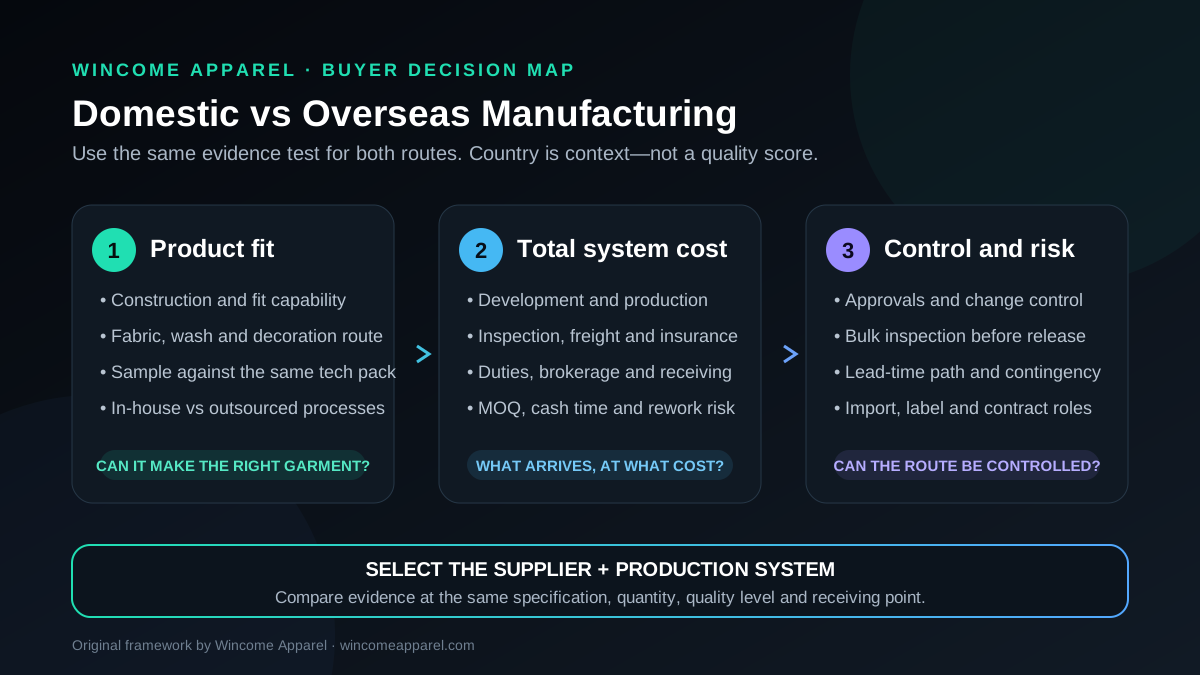
Local vs overseas clothing manufacturer comparison
| Decision factor | Domestic route may offer | Overseas route may offer | Evidence to compare |
|---|---|---|---|
| Product capability | Access to nearby specialists and easier in-person review | Access to different supply clusters, materials and processes | Comparable sample, equipment/process evidence and relevant order record |
| Development | Shorter physical handoffs when materials and skills are available | Integrated sourcing or full-package support when the supplier provides it | Development scope, sample stages, feedback method and approval owner |
| MOQ | Potentially smaller production runs in some workshops | Potential scale efficiency, with material and process minimums | MOQ by style, fabric, color, size, decoration and packing |
| Cost | Fewer cross-border logistics and import line items | Different labor, material and production economics | Delivered or landed cost at the same receiving point |
| Lead time | Potentially shorter sample and delivery transit | Potentially deeper capacity or process integration | Critical path from brief through receiving, with queue and buffer |
| Control | Easier visits or same-time-zone communication in some cases | Can be managed with clear records, inspections and local coordination | Named owners, approval log, inspection plan and change control |
| Compliance | No import entry for production that stays in the home market | Customs, origin, classification and cross-border documentation apply | Destination rules, importer role, labels and current tariff treatment |
The words “may offer” matter. A factory’s actual system can reverse any common assumption in this table.
Start with product capability, not the country
First define what the garment requires: knit or woven construction, pattern and grading support, target fabric structure and weight, dye or wash process, decoration, trims, testing, packing and expected volume. Then ask each supplier to identify which work is performed in-house, which work is subcontracted and how the complete route is controlled.
A nearby manufacturer may be the better choice for rapid hands-on fit development, but only if it can source the right material and execute the required construction. An overseas supplier may have a stronger cluster for fabric, washing and decoration, but only if the brand can control specifications, approvals and shipment evidence. Use the private label, white label and cut-and-sew comparison to define the production route before comparing locations.
Request proof for the exact product
- A sample made from the intended or clearly identified substitute material
- Measured construction and decoration results against the tech pack
- Disclosure of outsourced processes and responsible approval points
- Bulk quality controls and retained references for repeat orders
- Capacity and material availability for the intended order window
Compare landed cost, not the factory unit price
A domestic quote and an overseas quote often stop at different points. One may include delivery; another may show only the garment before freight, import charges and destination handling. Normalize both offers to the same quantity, specification, quality level, packing and receiving point.
| Cost layer | Items to confirm |
|---|---|
| Development | Pattern, grading, sample rounds, artwork setup, testing and revisions |
| Production | Garment, fabric, trims, decoration, labels, packing and size/color allocation |
| Quality | Pre-production controls, inline checks, final inspection and any third-party testing |
| Origin logistics | Pickup, inland transport, export handling and documents |
| International movement | Freight, insurance and route-specific surcharges |
| Import and destination | Applicable duties and taxes, brokerage, terminal or handling charges, receiving and final delivery |
| Risk allowance | Financing time, buffer inventory, delay exposure, rework and replacement handling |
Ask for the named shipping term and included delivery scope, but do not use the term alone as the cost model. Identify the handoff point, who appoints the forwarder and broker, who is importer of record, which charges are estimates, and which destination costs remain outside the quote.
Build the complete lead-time path
Distance affects transport, not every stage of the order. The critical path can include tech-pack clarification, fabric sourcing, lab dips, prototype and fit revisions, pre-production approval, production queue, bulk work, inspection, export booking, international transit, customs clearance, receiving and distribution.
Domestic manufacturing may reduce sample and bulk transit, yet a missing material or full production calendar can extend the order. Overseas production may add freight and clearance, yet an integrated supply cluster can reduce handoffs for some products. Compare dated dependencies in the custom clothing production timeline and require both suppliers to state what starts only after approval or deposit.
Evaluate MOQ and cash exposure together
Lower MOQ does not always mean lower launch risk, and overseas does not always mean a higher minimum. Some domestic workshops accept small runs but require the buyer to source materials or pay more setup cost. Some overseas suppliers can combine flexible garment quantities with fabric, dye, trim or decoration minimums. The relevant number is the cash committed across all order layers.
Confirm MOQ by style, fabric, color, size, decoration, label and packaging. Then model deposits, sample costs, testing, balance timing, freight payment, import charges and the number of weeks cash is tied up before sellable stock arrives. The clothing manufacturer MOQ guide provides the full layer-by-layer check.
Communication and quality control are systems
Proximity can make visits and physical sample review easier, but it does not replace a controlled specification. Distance adds coordination, yet it does not prevent quality control when the buyer and supplier use measured approvals, versioned files, retained samples, change authorization and inspection evidence.
In our apparel RFQ and production reviews, we keep product decisions in the tech pack and approval log rather than leaving them in scattered messages. For overseas orders, the handoff between sample approval and bulk production deserves special attention: approved materials, measurements, artwork placement and tolerances should be identifiable in the bulk inspection plan.
- One approved tech-pack version and bill of materials
- Named sample stage and purpose for every physical submission
- Written record of comments, changes and approval authority
- Defined inspection timing, sample size and defect limits
- Photos, measurements or reports before shipment release
- Escalation path for substitutions, delays and nonconformity
Use the garment quality inspection checklist to make the same evidence request for domestic and overseas production.
Overseas production adds import and labeling responsibilities
For a U.S.-bound order, do not assume that the manufacturer, freight forwarder or customs broker removes the buyer’s responsibilities. U.S. Customs and Border Protection explains that the importing community shares responsibility for compliance, and the importer of record must use reasonable care for entry information such as classification, value and origin. Confirm the actual importer role before accepting a shipping quote.
Classification and duty treatment depend on the current product details and tariff schedule. Check the current U.S. Harmonized Tariff Schedule information for the garment rather than copying a rate from an old article. Fiber, construction, gender category and other product facts can affect apparel classification.
The U.S. Federal Trade Commission apparel-labeling guidance states that most textile and wool products require fiber content, country of origin and the identity of the manufacturer or another responsible business; care instructions also apply to covered garments. Other destinations have their own requirements. Treat labels, claims, testing and import documents as project inputs, not last-minute packaging details.
A practical decision matrix for clothing brands
Score each real supplier from one to five only after reviewing evidence. Weight the factors that protect the customer promise; do not give every factor equal importance by default.
| Question | Evidence | Why it matters |
|---|---|---|
| Can this supplier make the exact product? | Relevant sample, process map and material route | Eliminates unsuitable factories before price comparison |
| What is the normalized delivered cost? | Itemized quote and landed-cost worksheet | Prevents an incomplete quote from looking cheaper |
| How much cash and inventory risk is committed? | MOQ layers, payment dates and quantity allocation | Connects price with launch exposure |
| Can development be managed? | Sample plan, response owner and approval record | Protects fit, fabric and construction decisions |
| Can bulk quality be verified before release? | Inspection plan, limits and reporting method | Reduces reliance on the sales sample alone |
| Is the delivery path controlled? | Dated critical path, shipping scope and buffer | Shows the dependencies behind the promise |
| Are commercial and compliance roles clear? | Contract, ownership terms, importer and label plan | Prevents responsibility gaps after production |
Consider a hybrid or dual-source plan
The decision does not have to be all domestic or all overseas. A brand might develop fit locally and place stable volume overseas, launch a time-sensitive capsule domestically while building a second route, or assign products to different suppliers according to capability. Another brand may keep one route because duplicated development and materials would add more risk than resilience.
If two sources will make the same style, control pattern versions, grading, approved materials, color standards, artwork, tolerances and inspection limits. A second supplier is not a backup until it has produced acceptable evidence under the same specification.
Questions for a domestic or overseas clothing manufacturing RFQ
- Which product types, fabrics and processes are directly relevant to this style?
- Which work is in-house, and which work is subcontracted?
- What MOQ applies at each style, material, color, size and decoration layer?
- Which sample stages, revisions and delivery costs are included?
- What does the unit quote include, and at which named handoff point?
- Who manages freight, insurance, customs brokerage and final delivery?
- Who will be importer of record, and who supplies classification and origin data?
- Which label, testing and destination-market tasks belong to each party?
- What bulk inspection evidence is provided before shipment release?
- What files, samples and records are retained for repeat production?
Put the answers into the custom clothing RFQ template so both routes respond to the same scope.
Warning signs in a domestic vs overseas comparison
- A country name is used as proof of quality, ethics, speed or low cost.
- One quote includes delivered cost while the other stops at the factory.
- The supplier offers a firm schedule before confirming fabric and sample approvals.
- A low MOQ statement hides separate material or decoration minimums.
- The sales sample is approved without a bulk inspection or change-control plan.
- “Door to door” is offered without naming importer, broker and excluded charges.
- The destination label and testing plan is postponed until packing.
- A second source is called a backup without producing against the controlled specification.
After choosing a route, use the clothing manufacturer evaluation checklist to verify the individual supplier rather than treating location as the final decision.
Sources and research note
This guide was shaped by recurring buyer questions in apparel-founder discussions about U.S. versus overseas factories, fabric sourcing, MOQ, communication, sampling and quality risk. Community discussion helps identify the questions; it does not establish a universal answer. Customs and labeling statements above were checked against current primary sources: