DTF vs DTG vs screen printing: the quick answer
Screen printing is often a strong route for repeat artwork and larger runs because each color is prepared as a screen and the setup can be spread across more units. DTG prints ink directly onto the garment and can suit detailed, multi-color artwork on compatible garments without screen setup. DTF prints onto film and heat-applies the transfer, making it flexible across many fabrics and useful for detailed or smaller mixed runs.
Those descriptions narrow the route, but they do not approve it. A method that works on a lightweight white cotton T-shirt may behave differently on a dark heavyweight hoodie, washed jersey, polyester blend or large solid back graphic.
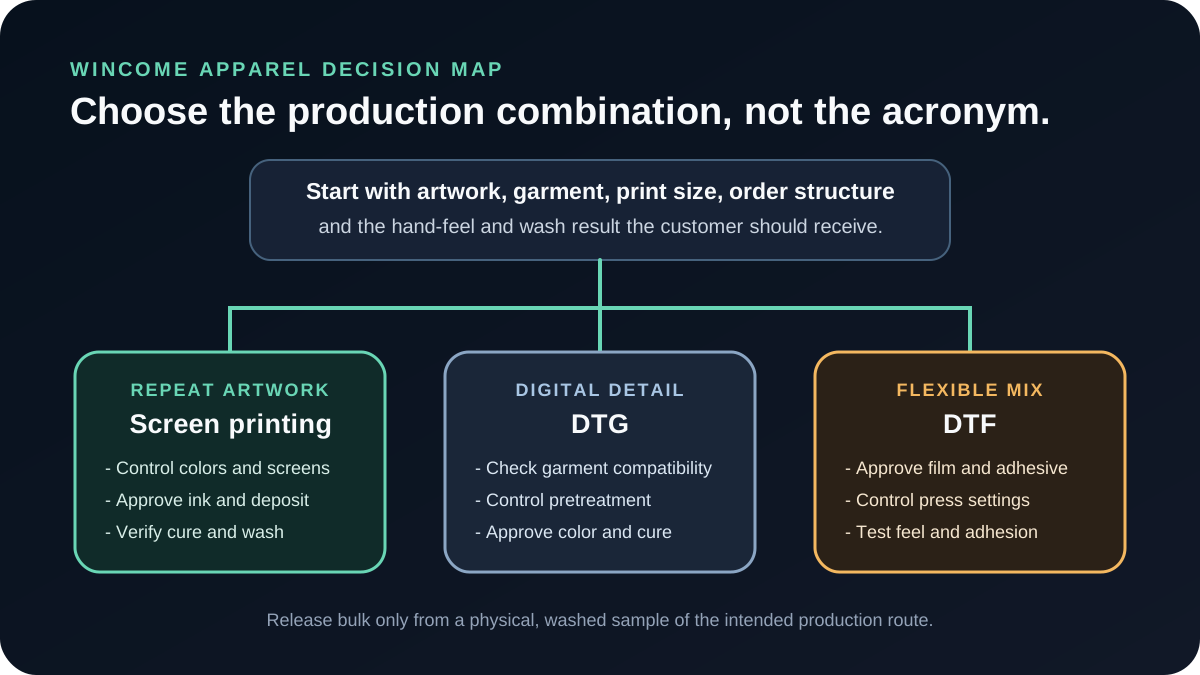
Compare DTF, DTG and screen printing
| Decision factor | Screen printing | DTG | DTF |
|---|---|---|---|
| How the image is applied | Ink passes through prepared screens onto the garment | Ink is printed directly onto the garment | Printed film and adhesive are heat-applied to the garment |
| Artwork direction | Strong for controlled colors, repeats and separated artwork; detail depends on mesh, ink and setup | Useful for fine detail, gradients and multi-color digital artwork | Useful for fine detail, gradients and multi-color artwork across varied substrates |
| Fabric direction | Broad capability with the correct ink, underbase and cure route | Cotton-rich garments are generally the most straightforward; darks commonly add pretreatment and white ink | Can suit cotton, polyester and blends when transfer and press settings are compatible |
| Hand feel | Ranges from soft water-based coverage to a more noticeable plastisol deposit | Can feel integrated and soft, but pretreatment, white ink and coverage affect the result | Creates a surface layer; coverage, adhesive and pressing strongly affect feel |
| Quantity structure | Setup is repeated by color and location, so repeat volume can improve efficiency | Low setup burden can suit samples, short runs and changing artwork | Low screen setup and flexible batching can suit short or mixed runs |
| Main approval risks | Registration, opacity, ink deposit and cure | Pretreatment, color on dark garments, cure and fabric compatibility | Film, adhesive, press parameters, edge or surface feel and peel performance |
Do not turn the table into a universal quantity rule. Quote structure depends on design colors, print locations, garment handling, batch consistency and the equipment used by the actual production route.
Choose screen printing for controlled repeats, not only for “bulk”
Each screen adds setup, registration and cleaning work, but the process can be efficient when the same approved artwork repeats across enough garments. It can also support distinct ink directions, including opaque, soft-hand, water-based, puff and other systems. That variety is a reason to specify the ink route rather than writing only “screen print” in the tech pack.
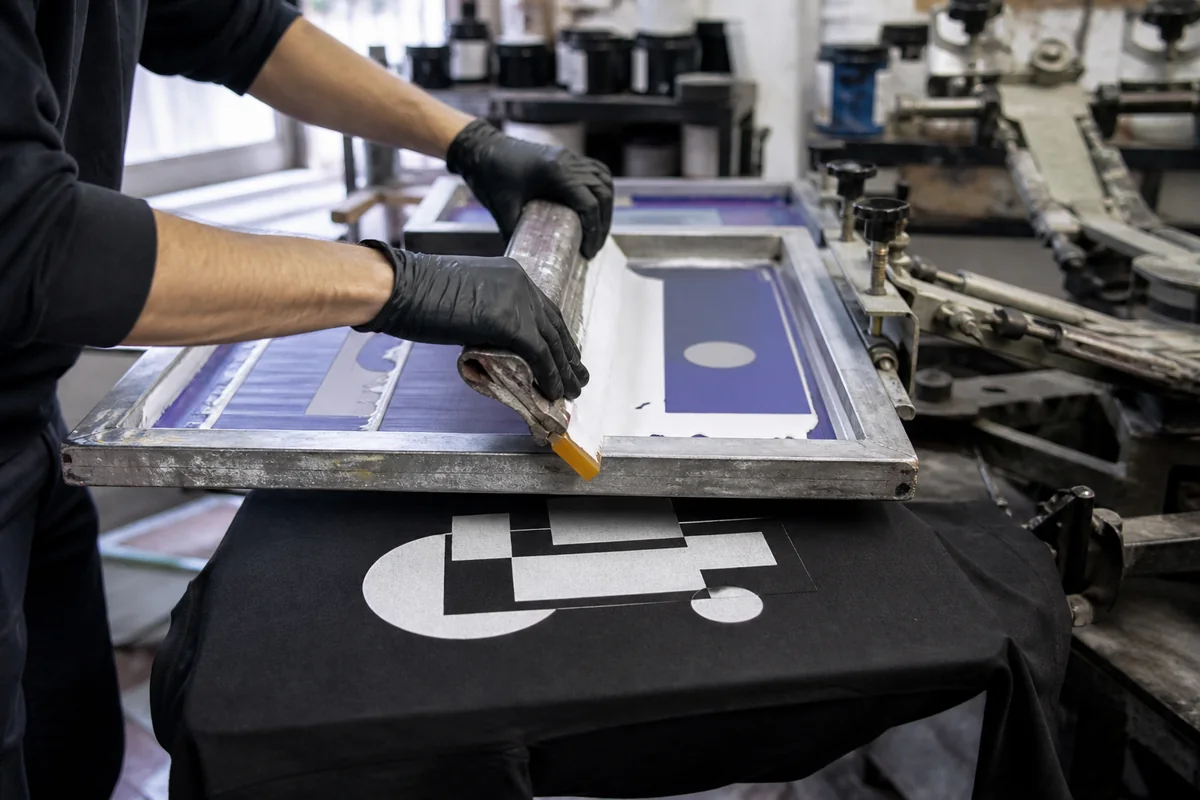
- Identify each print location and finished size.
- Confirm spot colors, separations, underbase and any color-matching requirement.
- Test the actual garment surface, stretch, seams and wash finish.
- Record cure requirements and verify the printed sample after washing.
- Keep the approved strike-off or garment as the repeat-order reference.
Screen-printing equipment guidance emphasizes that an under-cured print may initially look acceptable but later crack or wash out, which is why cure verification and wash testing matter before production release.
Choose DTG when digital detail and the garment are compatible
DTG places ink directly onto the garment, reducing color-by-color screen setup. It can be useful for photographic artwork, gradients, changing graphics, samples and small runs. The best route still depends on the garment. Cotton-rich surfaces are generally easier to manage than many synthetic or highly textured options.
Dark garments commonly require pretreatment and a white-ink base. These can change opacity, surface appearance and hand feel. Epson’s DTG documentation, for example, gives different pretreatment directions by garment color and requires testing rather than one setting for every shirt.
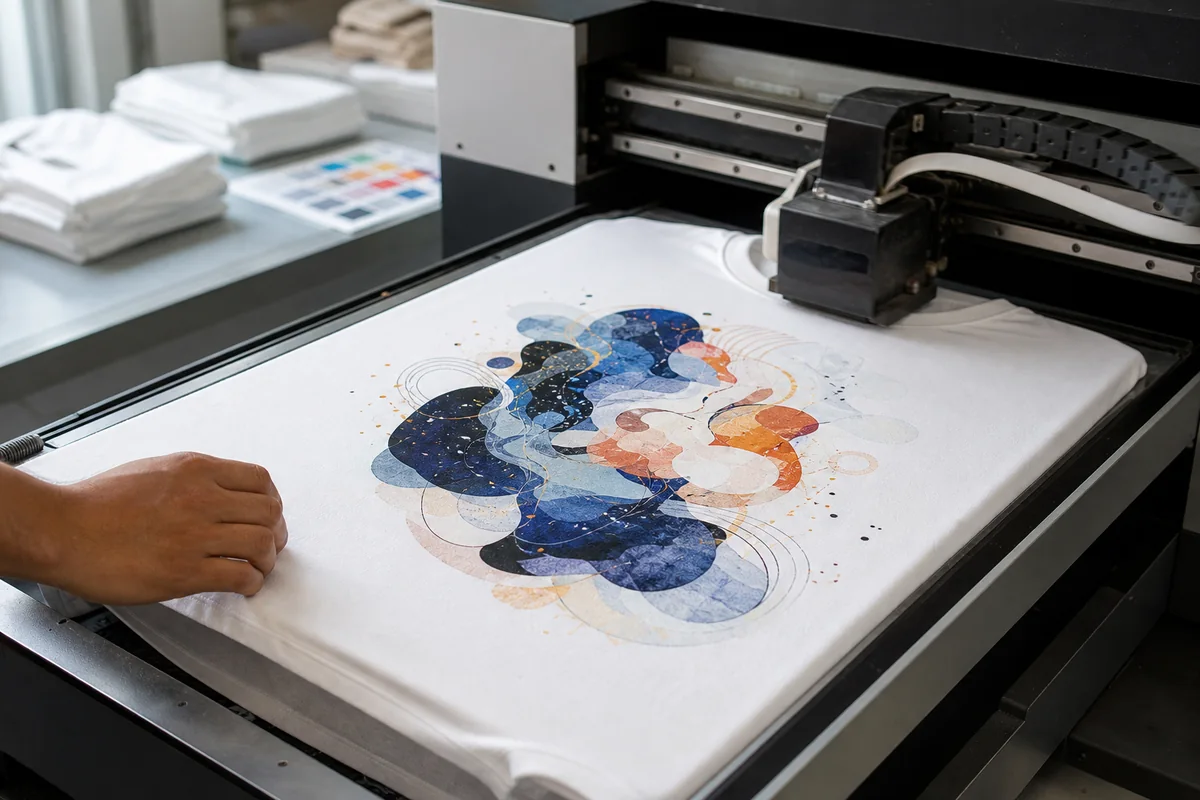
- Provide the final artwork at the required physical size and resolution.
- Approve the result on every materially different garment color.
- Check pretreatment marks, white-ink coverage and fine-detail edges.
- Review the feel of large solid areas, not only a small logo.
- Confirm that the sampled DTG route is also the intended bulk route.
Choose DTF for flexible substrates and smaller mixed runs
DTF transfers the printed design from film to the garment using adhesive and heat. It can be practical when artwork is detailed, quantities are limited, garment fabrics vary or screen setup would be disproportionate. It can also help when one design must be applied across cotton, blends or performance fabrics—subject to an actual compatibility test.
The surface layer is part of the design decision. Large solid graphics can feel and flex differently from artwork with open negative space or halftones. Film, adhesive, powder application, curing, press pressure, time, temperature and peel direction can all change the result.
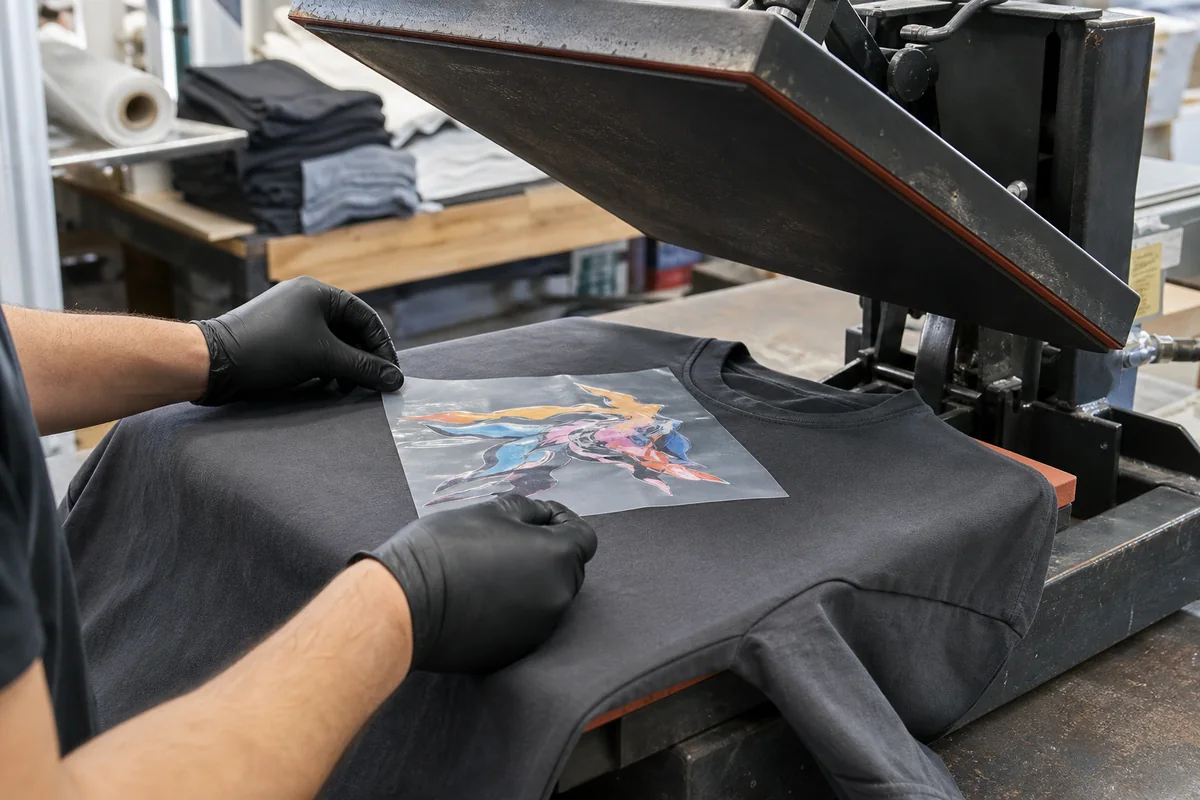
DTF process guidance identifies poor curing or application as causes of weak adhesion, brittleness, cracking, bubbling or peeling. That supports a practical buyer response: test the real production combination instead of relying on a generic durability promise.
Use six questions to select the method
- What does the artwork require? Record color count, gradients, fine detail, solid coverage, halftones and any exact color requirement.
- What is the garment? State composition, fabric structure, GSM, stretch, color, wash and surface texture.
- How large and where is the print? A small chest logo and a full back graphic create different hand-feel, access and cure risks.
- How is the order divided? Give units by artwork, location, garment color, fabric and size rather than one total quantity.
- What should the customer feel? Define whether softness, opacity, raised surface, stretch or low coverage matters.
- What evidence releases bulk? Name the strike-off or garment sample, color approval, placement tolerance and wash-test record.
If the product combines print with embroidery or puff, continue with the screen printing, embroidery and puff print guide because operation order and machine access become additional decisions.
Why a print sample may not match bulk production
The problem is often not a mysterious gap between “sample quality” and “factory quality.” The sample and bulk may have used different inputs or settings.
| Possible change | What it can affect | Buyer control |
|---|---|---|
| Different garment or fabric lot | Absorption, color, surface, stretch and adhesion | Identify the approved garment and substitution rule |
| Different ink, transfer or pretreatment | Color, opacity, hand feel and wash response | Record the production system, not only the method acronym |
| Different equipment or operator settings | Registration, deposit, pressure, temperature and cure | Confirm bulk will use the approved route and settings |
| Artwork rebuilt or resized | Line weight, halftones, detail and coverage | Lock the production file, dimensions and placement |
| Garment wash added after decoration | Shade, shrinkage, cracking and surface distress | Approve the real process sequence |
If a supplier proposes DTG for the sample and screen printing for bulk, treat the bulk process as a new approval. Color, feel and detail can change even when the artwork file is identical.
Approve print durability before bulk production
No responsible approval should promise a fixed number of washes from the method name alone. Build a repeatable test around the intended product and customer care direction.
- Photograph the unwashed sample in controlled light
- Record garment, ink or transfer route and print dimensions
- Check surface, edge, opacity, color and registration
- Use the intended wash and dry instruction
- Repeat the agreed cycle and photograph the same areas
- Review cracking, peeling, fading, distortion and adhesion
- Record acceptance criteria and the person approving bulk
A wash test is not a lifetime guarantee, but it is stronger evidence than a supplier adjective. If the garment will be sold with a particular care instruction, the approval route and customer-facing instruction should not contradict each other.
What to send for a comparable printing quote
Send enough information for each supplier to quote the same product rather than selecting a method on your behalf from incomplete references.
- Garment type, composition, GSM, color and wash
- Vector or production-resolution artwork
- Finished print width and height
- Placement from named garment reference points
- Quantity by artwork, garment color and print location
- Required color references and tolerance
- Hand-feel, stretch and opacity priorities
- Sample and wash-test approval requirement
- Whether the same method must be retained for reorders
Use the manufacturer file handoff guide and custom clothing RFQ template to organize the request.
Technical reference notes
This guide uses production-stage controls rather than fixed marketing claims. For deeper process detail, review the ScreenPrinting.com screen-print setup and cure guide, its DTF cure and test guidance, and the Epson SureColor DTG user guide. Equipment-specific settings remain subordinate to the instructions for the actual ink, transfer, garment and machinery used.
Separate the print choice from the inventory choice
A suitable print method does not decide whether the brand should produce on demand, collect preorders or hold finished inventory. Use the print on demand vs preorder vs bulk clothing guide to model customer waiting time, product control, MOQ and inventory exposure separately.