POD vs preorder vs bulk: the quick answer
Use print on demand (POD) when the immediate goal is to test artwork or audience response with minimal committed inventory and an available garment already supports the promise. Use a preorder when the brand has an approved physical product, a credible audience and a production timeline it can communicate before taking payment. Use small-bulk production when product control, inspection, launch-day dispatch and consistent customer experience justify carrying inventory.
None of the three removes risk. POD shifts more risk into product limitation, unit economics and fulfillment consistency. Preorder shifts risk into trust, cash timing and delivery execution. Bulk shifts risk into unsold inventory, size balance and working capital.
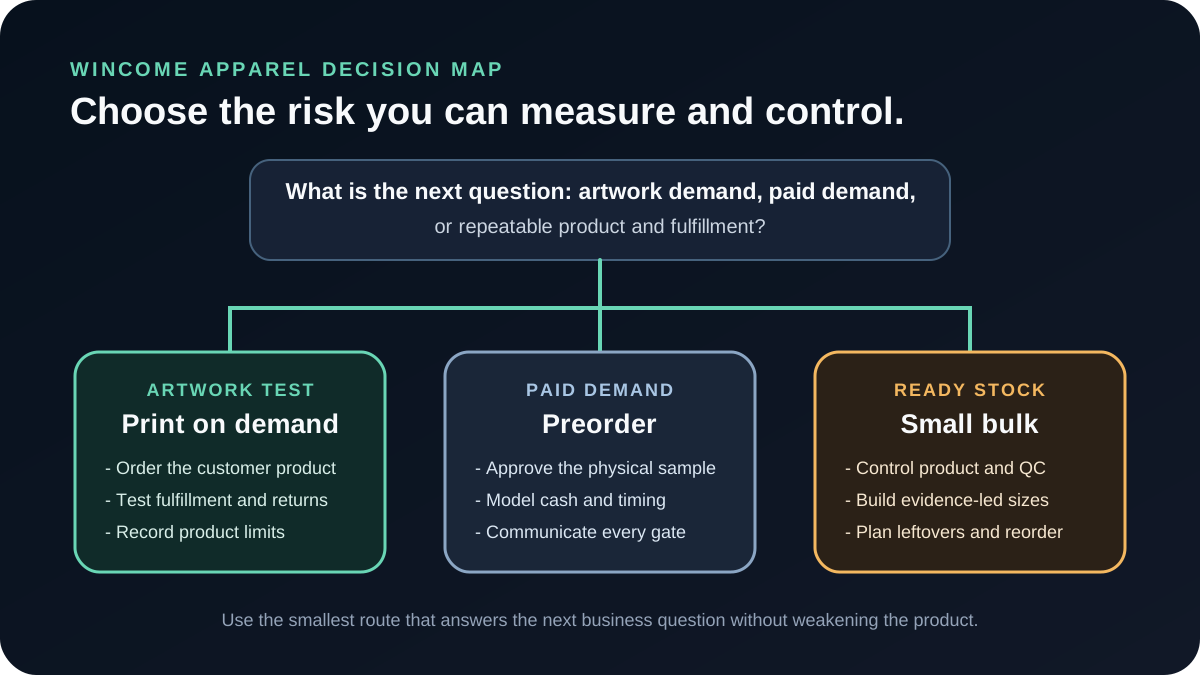
First define the three production models correctly
Print on demand
An item is produced after the customer orders, often through a provider that combines a finished blank, decoration and direct fulfillment. This can reduce owned inventory, but the available garment, decoration locations, labels, packaging, shipping route and inspection access may be constrained.
Preorder
The brand presents an approved product, collects orders during a stated window and places a consolidated production order afterward. Preorder is a selling and cash-timing model, not a garment construction method. The product may use blanks, private label or custom cut-and-sew.
Small-bulk inventory
The brand approves and manufactures a defined quantity before sales open. Inventory can be inspected and dispatched faster after purchase, while the brand carries the cost and risk of unsold styles, colors and sizes.
Made-to-order, presale, crowdfunding and dropshipping can overlap with these terms, but do not assume they create identical payment, product or fulfillment responsibilities.
Compare product control, cash timing and customer risk
| Decision factor | Print on demand | Preorder | Small bulk |
|---|---|---|---|
| Inventory before sale | Usually minimal finished stock owned by the brand | Production quantity follows the sales window, subject to MOQ and planned extras | Finished stock is committed before sales |
| Product control | Often limited by available garments, placements and fulfillment options | Can support custom product if sampling and production are completed after orders | Supports the approved production scope before launch |
| Customer wait | Production and fulfillment happen after each order | Customer waits through the stated order, production and shipping window | Can dispatch from available stock after the order |
| Cash timing | Cost follows each order, but margin and payout timing still matter | Customer cash may arrive before production, but holds, refunds, deposits and development costs must be planned | Production is funded before sales revenue arrives |
| Main operating risk | Inconsistent fulfillment, limited differentiation and lower per-unit control | Missed dates, expectation gaps, cancellations and insufficient production cash | Leftover stock, wrong size mix and cash tied in inventory |
| Best evidence before use | Physical sample and provider-level fulfillment test | Approved sample, audience proof, quote, timeline and cash model | Approved sample, demand forecast, quantity matrix and receiving plan |
Use print on demand to validate the right question
POD can help test whether an audience responds to an artwork, message or niche without buying a full run. It is less useful when the product promise depends on a proprietary fit, fabric, wash, construction, trim system or packaging experience that the POD route cannot reproduce.
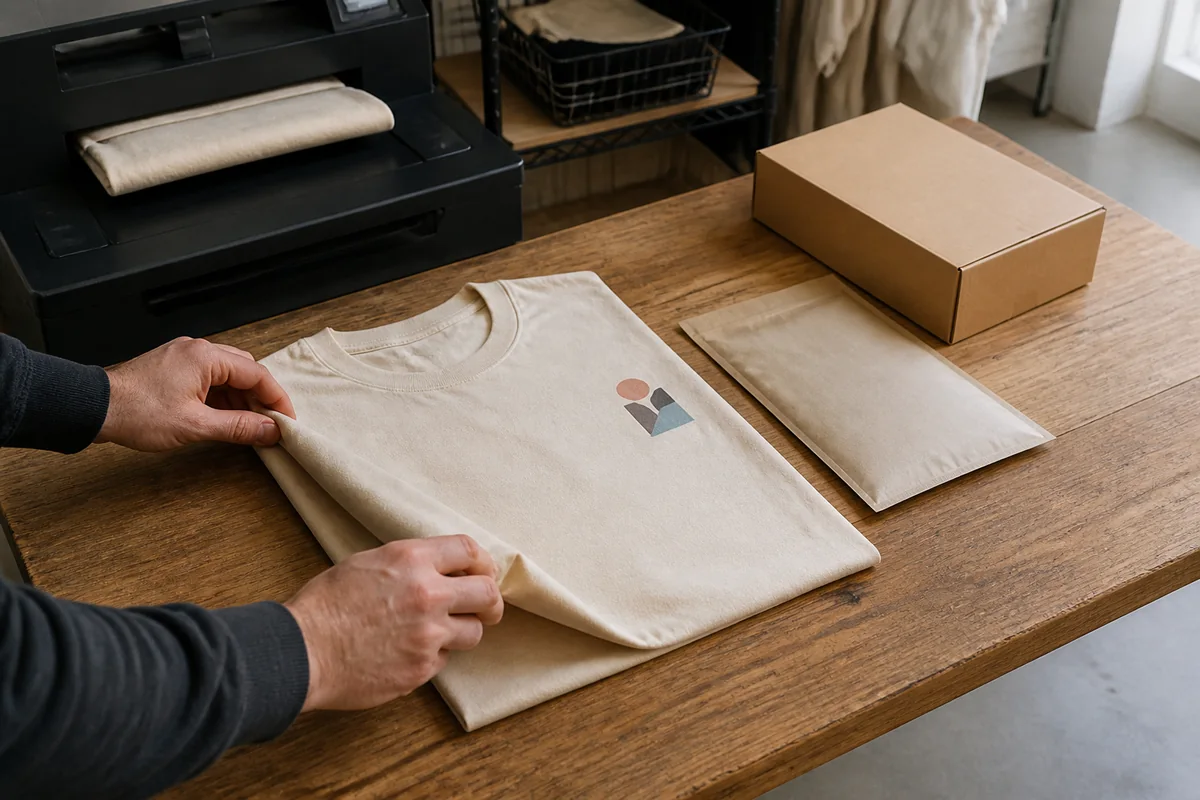
- Order and wear the same product the customer will receive.
- Test every material or color that may print differently.
- Check print dimensions, placement, hand feel and laundering.
- Place a complete customer-order test to review packing, tracking and delivery.
- Confirm returns, replacements and quality-claim handling.
- Record which parts of the experience the provider may change without approval.
POD can validate audience interest while still giving weak evidence about a future custom product. If the later bulk garment will use another fit, fabric or print method, plan a separate product validation before switching.
Use preorder only after the product and timeline are credible
A digital mockup does not prove fit, fabric, color, decoration or manufacturing readiness. A stronger preorder begins with an approved physical sample and a quote that defines quantity layers, open decisions, deposit, lead-time assumptions, inspection and delivery terms.
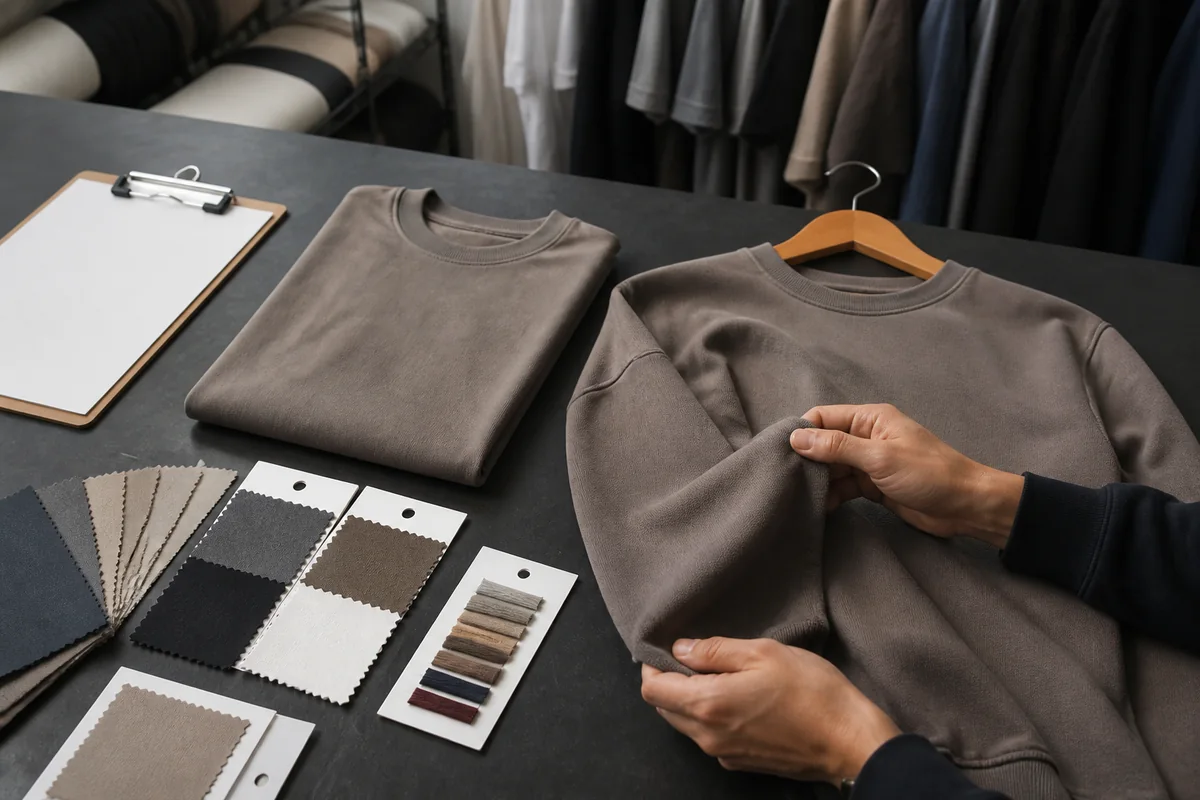
Before opening the sales window, map the full customer promise:
- Order opening and closing dates
- Product and size information based on the approved sample
- Production start condition and manufacturer MOQ
- Expected production, inspection and shipping sequence
- Customer update schedule
- Refund, cancellation and delay handling
- Payment payout or reserve timing
- Extra units for replacements, content or later sales
Use small bulk when product control and fast dispatch matter
Producing before launch lets the brand inspect stock, create content from the sale product, fulfill quickly and control the unboxing experience. It also turns forecast error into physical inventory. The first run should therefore be designed as a learning system, not only as a unit-cost negotiation.
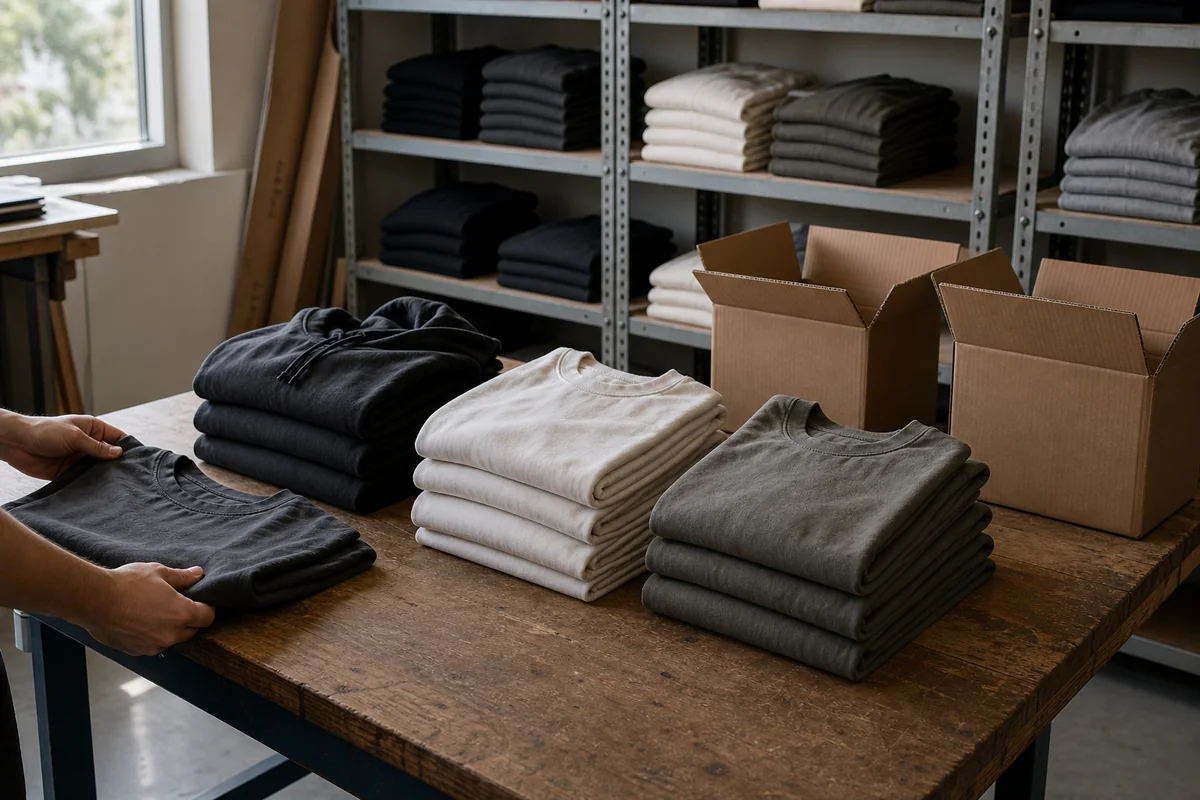
- Limit styles, colorways and decoration combinations to what the budget can support.
- Build size quantities from audience, channel and comparable sales evidence rather than a universal ratio.
- Calculate landed cost, not only garment price.
- Decide how slow-moving units, damages, returns and samples will be handled.
- Keep controlled records for a reorder instead of changing the product immediately.
- Define the signal that triggers a reorder before the launch begins.
The clothing MOQ guide explains why style, fabric, color, size, print and trim layers can all create different minimums inside one headline order quantity.
A hybrid first drop can separate validation from scale
A hybrid model may use physical approval and content samples, a time-limited preorder, then one consolidated manufacturing order with a controlled additional quantity. Another version uses a small ready-stock launch and opens a reorder only after the first stock sells through.
The hybrid is useful only when each stage has a clear purpose:
- Sample: prove the product, content and production route.
- Demand test: measure actual customer action rather than likes alone.
- Production release: convert paid or credible demand into a quantity matrix that satisfies the real MOQ structure.
- Controlled extras: add units only for named needs such as replacements, content, wholesale samples or fast dispatch.
- Reorder: repeat from approved records and the actual sales curve.
Do not calculate extra inventory from a generic percentage copied from another brand. Product category, audience, sales channel, size range, return pattern and reorder lead time all change the decision.
Use this first-drop decision checklist
| Question | If yes | If no |
|---|---|---|
| Is the product promise mainly artwork on an available garment? | Test a verified POD or blank route | Develop and sample the custom product |
| Is there an approved physical sale product? | Evaluate preorder or small bulk | Do not open a custom-product preorder yet |
| Can the audience accept and understand the full wait? | A transparent preorder may fit | Ready stock may protect the customer experience |
| Can the brand fund production if payouts are delayed? | Preorder cash timing may be workable | Reduce scope or secure another funding plan |
| Is there reliable demand and size evidence? | Build a controlled small-bulk matrix | Use a smaller validation stage |
| Does the route protect the required fit, fabric and branding? | Proceed to commercial comparison | Change the route, not the product promise |
Plan the launch before requesting production
- Freeze the customer and product promise. Write what must be controlled in fit, fabric, construction, decoration and presentation.
- Choose the production route. Compare verified blanks, modified garments and custom cut-and-sew using the streetwear production-route guide.
- Approve the physical product. Follow the clothing sample process and record all decisions.
- Model three quantity scenarios. Include MOQ layers, development, packaging, freight, duty, receiving, defects and returns.
- Build the customer timeline. Work backwards through approval, production, inspection, shipping and fulfillment using the custom clothing production timeline.
- Choose the smallest route that answers the next business question. The first drop should create evidence for the second, not consume every available resource.
Approve the decoration route before changing models
If a POD test and later bulk order use different printing processes, the product may change in color, hand feel and wash behavior. Compare and approve the intended route with the DTF vs DTG vs screen printing guide before treating early demand as proof of the bulk product.