What is the clothing sample development process?
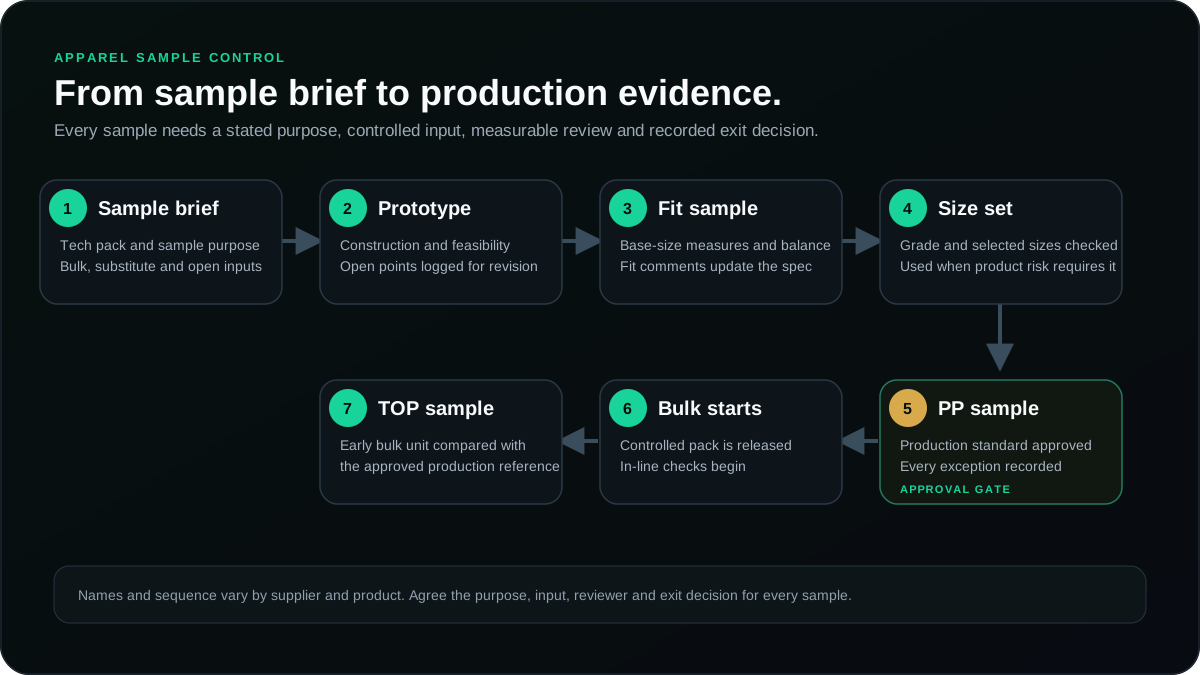
The clothing sample development process converts an apparel tech pack into a controlled bulk-production reference. A common route moves from a prototype or development sample to fit review, a size set when needed, a pre-production sample before bulk and a TOP sample from early production.
What to send for clothing sample development
A useful sample request defines both the garment and the decision the sample must support. Send enough information to separate confirmed requirements from open development choices.
| Input | What to define | Why it changes the sample |
|---|---|---|
| Product route | Existing base, modified private label or custom cut-and-sew | Determines pattern, sourcing and setup work |
| Technical brief | Measurements, construction, reference images and fit target | Creates measurable review criteria |
| Materials and branding | Fabric, GSM, color, wash, artwork, labels and packaging | Identifies trials, substitutes and bulk-correct components |
| Order structure | Quantity by style, color and size, plus destination market | Tests whether the proposed production route is commercially workable |
| Approval plan | Reviewer, comments format, target date and next decision | Prevents unresolved changes from moving into bulk production |
Use the custom clothing RFQ template to organize the commercial brief and the manufacturer file handoff guide to control artwork and production files.
Clothing sample types and what each one proves
| Sample type | Primary purpose | Typical exit decision |
|---|---|---|
| Prototype or development sample | Test silhouette, construction route and whether the current brief can be made | Revise the product or proceed to controlled fit development |
| Fit sample | Check base-size measurements, balance, mobility and wearing ease | Update the measurement specification and approve or resample the fit |
| Size set sample | Check grade rules and fit across selected sizes | Approve the size range or correct the grade before bulk |
| Pre-production or PP sample | Review the intended combination of fabric, construction, decoration, trims and labels | Release bulk, approve defined conditions or resample |
| TOP sample | Compare an early bulk unit with the approved sample and controlled documents | Continue production, correct the process or hold affected work |
| Shipment or final reference sample | Retain a packed unit or reference from completed production when required | Support shipment records, later review and repeat-order comparison |
Some suppliers use additional names, and one physical garment may serve more than one purpose. The label matters less than the written review scope.
The garment sampling process step by step
1. Define the sample brief
Send the garment type, target customer, reference images, measurements, fabric direction, construction, decoration, labels, packaging, quantity and destination market. Identify open questions instead of allowing them to become silent assumptions.
2. Build and review the prototype
The prototype tests whether the specification and construction route make sense in a physical garment. Review proportion, assembly and process feasibility. If substitute material is used, record which appearance or performance decisions remain open.
3. Measure and fit the garment
Measure the sample using the same points and methods defined in the tech pack. Evaluate balance and mobility on an appropriate fit model when relevant. Update the specification with actual values and consolidated comments rather than sending separate messages.
4. Validate the size range when required
A size set is useful when grading or fit across the range creates material risk. Review selected sizes against the grade rule; do not assume that an approved base size proves every size automatically.
5. Approve the production standard
The PP sample should represent the intended production route. Use the pre-production sample approval checklist to review fit, fabric, color, construction, decoration, wash, trims, labels and packaging. Mark every component as bulk-correct, substitute or pending.
6. Release controlled documents to bulk
Freeze the approved tech pack, measurement chart, artwork, sample comments and allowed differences. Assign one dated version as the production and inspection reference.
7. Compare the TOP sample with actual production
A top-of-production sample comes from early bulk output. Check it against the approved reference and confirm that actual materials, measurements, construction and decoration follow the controlled standard. A TOP sample supports production control; it does not replace in-line checks or final inspection.
How many sample rounds are needed?
There is no responsible fixed answer. A clear repeat order may need fewer stages than a new custom cut-and-sew garment with custom fabric, grading, wash effects and complex decoration. Continue sampling until the defined acceptance criteria are met and material risks can be verified.
| Resample when | Do not add a round only because |
|---|---|
| Fit or grading changes materially | A documented low-risk correction can be measured during the agreed next control |
| Fabric, wash or decoration changes the result | A personal preference is not tied to the product brief |
| A substitute prevents approval of a required property | The team has not consolidated duplicate comments |
| Construction or function remains unresolved | An approved decision is being reopened without new evidence |
What changes clothing sample cost and lead time?
Sample cost and timing depend on the actual scope. Ask the supplier to separate pattern or specification work, material sourcing, one-off cutting and sewing, decoration or wash trials, labels, courier charges and the number of revisions included in the quotation. Use the clothing sample cost guide to compare the development work, physical product, revisions and delivery included before paying.
- New pattern versus an existing controlled block
- Available fabric versus custom knitting, dyeing or finishing
- Simple construction versus complex panels, pockets or trims
- Standard decoration versus strike-offs, embroidery digitizing or wash development
- One review size versus a size set
- Buyer response time and consolidated revision quality
Do not build a launch date from a generic sample promise. Place sample reviews and decision time inside the custom clothing production timeline.
Clothing sample process warning signs
- The sample has no style, size, version or date identity.
- The supplier cannot state which materials are bulk-correct and which are substitutes.
- Fit comments are accepted without measurements or a revised specification.
- Different stakeholders send conflicting instructions in separate chat threads.
- A material issue is deferred with “we will fix it in production.”
- Bulk begins before artwork, labels, packaging or quality checkpoints are controlled.
- The approved sample cannot be connected to the final inspection criteria.
Use the clothing manufacturer evaluation checklist to test whether the sampling and change-control process is documented before payment.
Connect sample approval to bulk evidence
Retain the approved sample, final tech pack, measurement chart, material and trim references, artwork files, comment log and approval record together. These become inputs to the garment inspection checklist and future reorders.
A documented custom tracksuit sample-to-bulk case shows how measurable corrections to fit, print and embroidery preceded a larger order. A separate repeat hoodie case shows why identifying a sample-file mismatch before bulk matters.
Write sample comments a factory can verify
Good feedback identifies the sample and specification version, records what was observed and states the required correction in measurable terms.
For example, replace “move the print slightly higher” with a distance from a named garment point, the artwork size and the accepted placement tolerance.