What does a clothing sample cost?
A custom clothing sample usually costs more per piece than a bulk garment because pattern work, sourcing, setup, programming, one-off sewing and inspection are concentrated into one or a few pieces. A quote cannot be judged as high or low until the buyer verifies the sample type, specification, material route, decoration, revisions and shipping included.
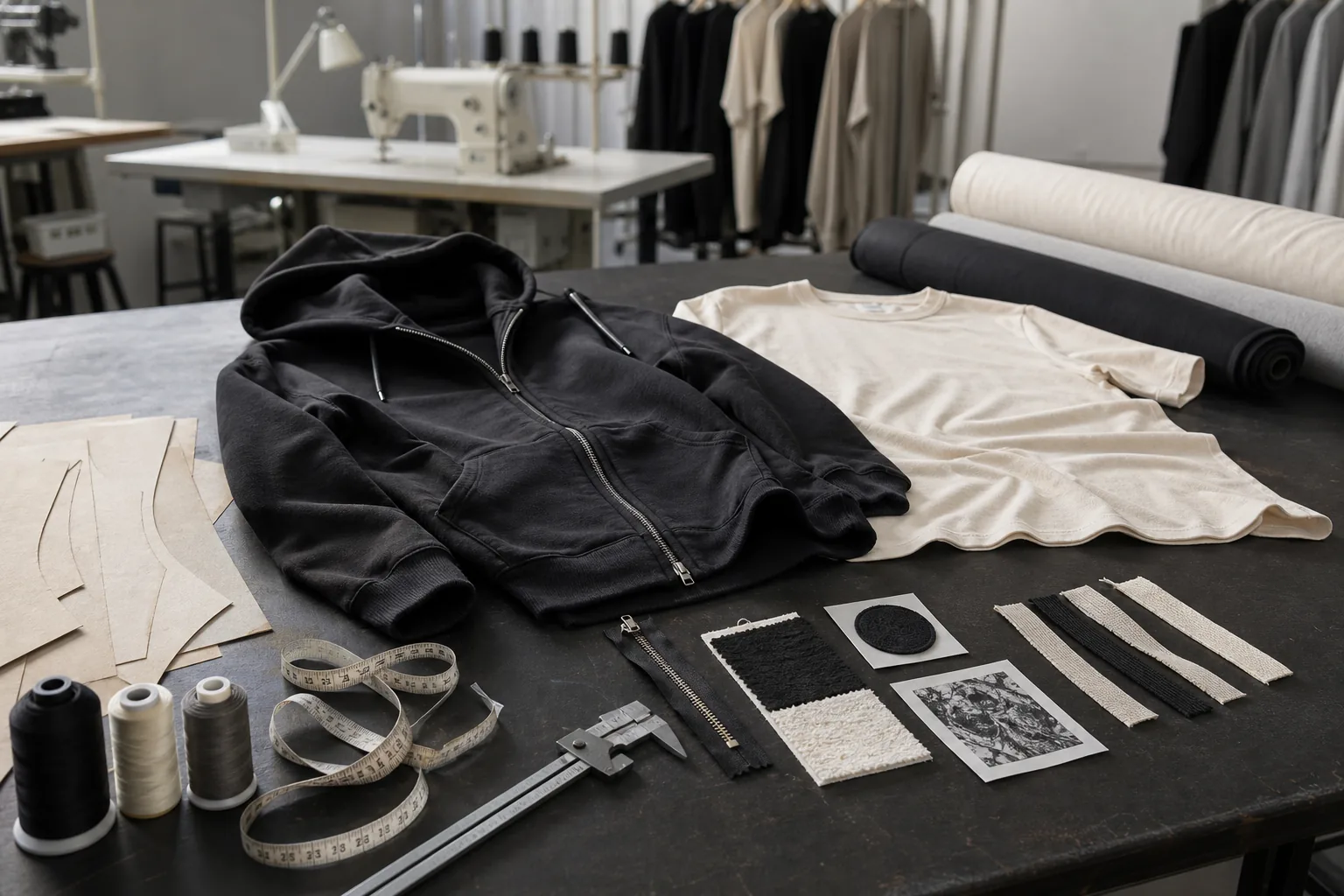
What a clothing sample quote can cover
The word sample may describe a decorated blank, a first prototype, a fit sample or a production-intent approval garment. Ask for the cost stack in writing.
| Quote component | Why a one-off sample absorbs it | What to request |
|---|---|---|
| Brief and file review | Measurements, artwork, BOM and open points must be translated into instructions | Specification name and version used for quoting |
| Pattern and fit work | A new block, pattern adjustment or grade check is development work | New pattern, adapted block or stock garment stated clearly |
| Material sourcing | Swatches, minimum cuts, color matching and supplier handling may be needed | Actual material, substitute or approval swatch identified |
| Cutting and sewing | One piece interrupts normal batching and needs individual handling | Construction details and workmanship standard |
| Decoration setup | Screens, embroidery digitizing, print files or heat-press settings may be prepared | Artwork size, placement, colors and setup ownership |
| Trims and labels | Custom labels, zippers, cords or packaging can carry separate setup and minimums | Stock, substitute or custom status for every trim |
| Finishing | Wash, dye, distressing, pressing or special handling adds a separate route | Target effect and accepted variation documented |
| Inspection evidence | Measurements, photos and comments require skilled review time | Measurement report, photos or physical approval only |
| Packing and shipping | Courier cost is not reduced by garment quantity in the same way as bulk freight | Destination, method, term and charges included |
Identify the sample route before comparing price
| Development route | Typical work included | Main quote questions |
|---|---|---|
| Stock blank plus decoration | Finished blank selection, artwork setup and print or embroidery test | Is the exact blank available for repeat orders? Is setup reusable? |
| Modified blank or private label base | Supplier base garment plus selected labels, trims or limited alterations | Which features are fixed and which are being developed? |
| Full cut-and-sew | Pattern, material, construction, fit and finishing developed to the brief | Does the quote include pattern work, revisions and the intended bulk material? |
| Special wash or complex surface work | Base garment development plus wash, dye, distressing or combined decoration trials | What variation is acceptable and which test confirms repeatability? |
Use the white label, private label and cut-and-sew comparison to choose the production route before requesting sample prices. If the route is not defined, a lower quote may simply describe less development.
Why the sample unit price is higher than bulk
A first sample is a development project, while an approved bulk garment is a repeated production unit. Bulk can spread approved setup over a larger quantity, buy materials more efficiently and group cutting, sewing, decoration and inspection. Sampling cannot assume those efficiencies before the product is controlled.
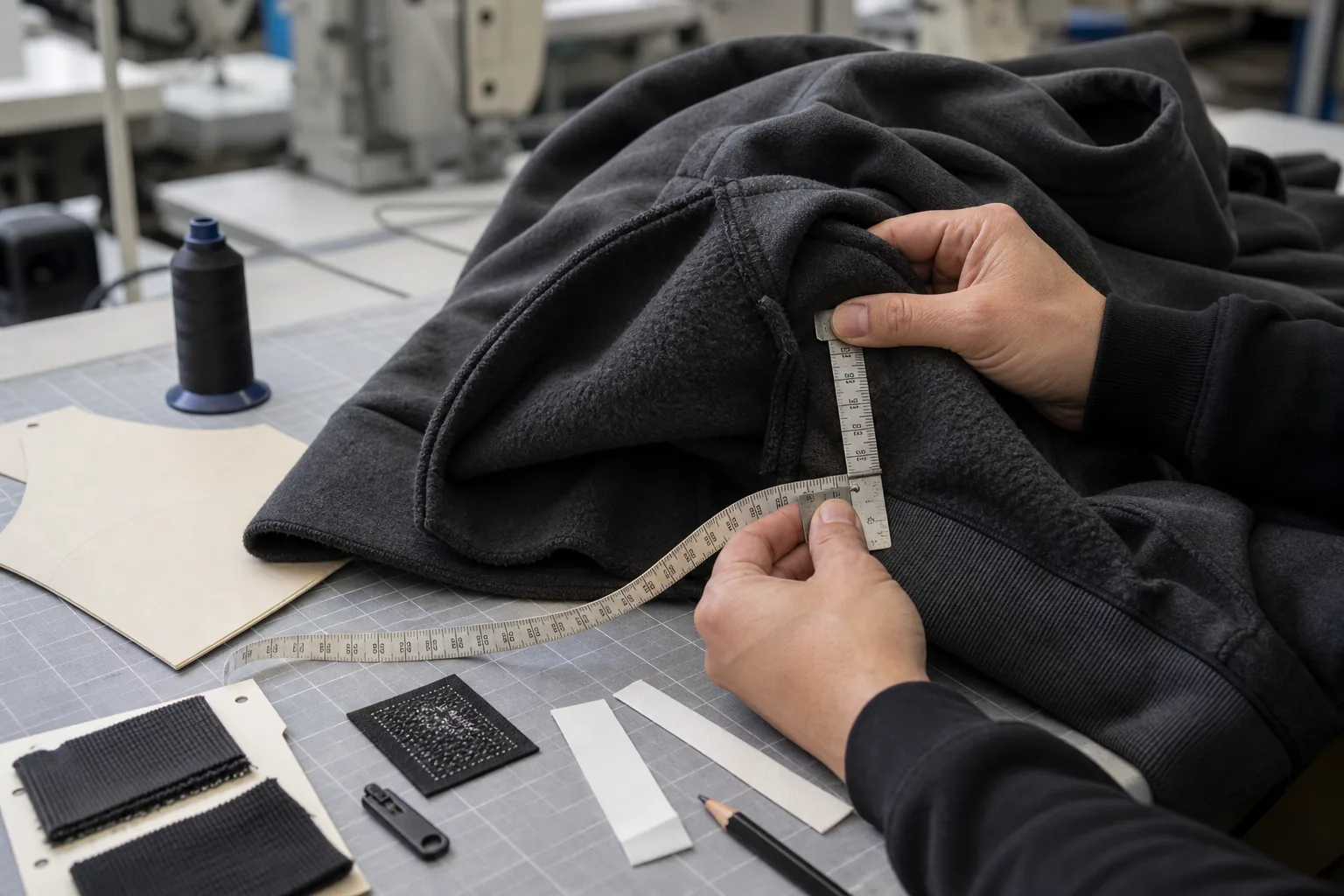
The sample also exposes information that can change the later bulk quote: actual material consumption, stitch operations, decoration behavior, shrinkage, fit corrections and finishing risk. For that reason, compare the initial estimate with the confirmed post-sample scope rather than expecting every early assumption to remain unchanged.
How to compare clothing sample quotes
- Send one controlled brief. Use the same tech pack, artwork, measurements and quantity assumptions for every quote.
- Name the sample purpose. State whether it should test appearance, fit, size range, decoration, pre-production readiness or another decision.
- Separate product and logistics. Ask for the sample, setup, revisions and shipping as identifiable items.
- Check the material route. Confirm whether the sample uses bulk-intent fabric, a stock substitute or a color swatch pending approval.
- Normalize decoration. Compare the same artwork size, placement, color count, stitch count and hand-feel target.
- Record revision terms. Define what happens when the supplier misses the brief and what happens when the buyer changes it.
- Compare the approval output. Decide whether you receive only a garment or also measurements, photos, comments and a corrected specification.
For the broader commercial comparison, use the custom clothing quote guide. It covers order mix, packing, quality scope and delivery responsibilities beyond the sample stage.
What should be written into the quote?
- Sample type, purpose and quantity
- Style name, specification version and artwork version
- Stock blank, adapted base or new cut-and-sew route
- Pattern, grading and measurement work included
- Fabric composition, structure, weight, color and substitution status
- Construction, decoration, wash and finishing scope
- Labels, trims and packing included
- Measurement report, photos or other approval evidence
- Revision rounds and responsibility for correction costs
- Whether setup files or molds can be reused
- Sample lead time and the event that starts the clock
- Shipping method, destination, trade term and exclusions
- Any sample-credit policy linked to a later bulk order
The manufacturer file handoff guide helps organize these inputs before the quote is requested.
Clarify revisions and sample credits before paying
Not every second sample should be treated the same. A correction required because the first sample missed an agreed measurement is different from a buyer changing the fabric, fit or artwork after review. Write the change rule before development starts.
| Situation | Useful written question |
|---|---|
| Supplier output misses the approved brief | Who pays for correction and replacement shipping? |
| Buyer changes the specification | How will new material, pattern or setup work be repriced? |
| Another sample round is needed | Which decisions will the next round approve? |
| Sample fee may be credited | What order threshold, deadline and exclusions apply? |
| Setup may be reusable | Who retains the pattern, screen, digitizing file or other setup? |
A credit is a commercial policy, not a universal rule. Confirm the amount, qualifying bulk order and expiry in writing instead of assuming the full sample payment will be refunded.
Sample quote red flags
- A total is given without naming the sample type or specification version.
- The quote does not say whether materials are actual, stock or substitute.
- Shipping appears only after payment although the destination was known.
- Unlimited revisions are promised without a change-control rule.
- A low sample price depends on an undisclosed bulk commitment.
- The supplier pushes bulk production before fit, decoration or material decisions are approved.
- The sample cannot be connected to measurements, artwork and an approval record.
Price alone cannot verify a production partner. Use the clothing manufacturer evaluation checklist to review identity, capability, samples, quality controls and commercial handoffs.
A practical sample-cost decision framework
| If the quote is... | Check this first | Buyer action |
|---|---|---|
| Much lower than alternatives | Missing pattern, material, setup, labels, inspection or shipping | Request an inclusion-and-exclusion sheet |
| Much higher than alternatives | Extra development, custom inputs, complex finishing or more evidence | Ask which work can be simplified without weakening the decision |
| Similar in total | Different revision, credit, lead-time or delivery terms | Normalize the commercial scope before selecting |
| Provisional | Open material, artwork, quantity or finish decisions | Close the most material assumptions, then reissue the quote |
Prepare a sample-development request
Start with the clothing sample development process to identify the sample stage, then use the fillable clothing RFQ template to record product, quantity, quality and delivery inputs. Before bulk release, review the pre-production sample checklist.
If you want a project-specific review, send the garment type, reference or tech pack, expected quantity, decoration, destination and the decision you need the sample to prove through the Wincome Apparel project inquiry.